
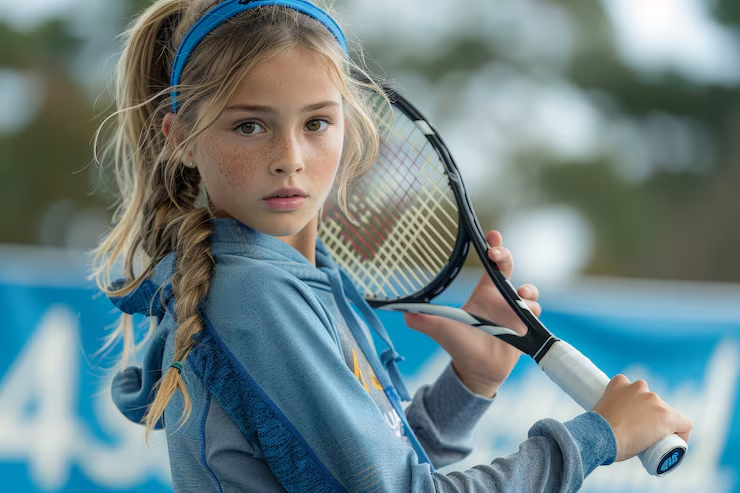
In childhood, confidence is the invisible fuel behind every new skill, friendship, and challenge overcome. It helps children step into unfamiliar situations, take healthy risks, and recover from setbacks. While books and classrooms can nurture the mind, sports — especially football and tennis — have a unique ability to build self-belief from the ground up. Through movement, play, achievement, and teamwork, childrens football training and tennis sessions offer powerful opportunities for kids to discover what they’re capable of.
Whether a child scores a goal at their childrens football club or lands their first successful serve during a private tennis session, they are not just building skill — they are building themselves.
Confidence Starts with Movement
Movement is often the first step toward confidence. For young children, physical success — running, kicking, hitting a ball — creates a visible sense of accomplishment. The simple act of mastering a new technique during football training or improving a forehand swing in a tennis session provides proof: “I can do this.”
This physical achievement resonates emotionally. Children begin to view their bodies as capable and trustworthy. They take pride in being able to run faster, kick harder, or hit with precision. This physical self-trust naturally evolves into broader confidence, spilling over into other areas like classroom participation or social interaction.
The Power of Repetition and Progress
Sports are built around repetition — drills, practice, routines. For children, this structure creates a safe environment to try, fail, and improve. At a childrens football club, repeating a passing drill or learning to dribble between cones gives kids a framework for success. They see tangible progress week by week.
The same applies to tennis sessions, where consistency is key. A child might struggle to make contact with the ball in the first few lessons, but with each try, their timing improves. That moment when the racket connects cleanly and the ball sails over the net becomes a small but powerful confidence milestone.
Positive Coaching and Encouragement
One of the most significant factors in building confidence through sport is the coach. At Children Sports League, all coaches are trained not just in football and tennis techniques, but in child development and positive communication. They understand that a child’s belief in themselves often begins with someone else believing in them first.
Coaches who offer consistent encouragement, praise effort, and frame mistakes as learning moments create an atmosphere of trust. In this setting, children feel safe to try new things, speak up, and be themselves — all essential ingredients for growing confidence.
Individual Growth in a Team Environment
Football training provides a beautiful balance of individual challenge and collective support. Each child is part of a team, yet they also work on personal goals — dribbling, passing, positioning. This dual experience helps children understand their unique contribution to a larger group.
When a child sees their actions helping the team — whether it’s a good pass, a defensive block, or simply supporting a teammate — they begin to feel valued. This feeling of being needed and noticed can dramatically boost self-worth, especially for children who may struggle in other settings.
Tennis: Confidence Through Autonomy
Tennis, on the other hand, often provides a different path to confidence. In a tennis session, children are more directly in control of the game. There’s no team to pass to, no one else to rely on. Every shot is theirs — every point, every decision.
This autonomy can be empowering. Children learn to manage pressure, to stay focused, and to bounce back quickly from mistakes. Coaches in private tennis sessions especially help children build routines and strategies for self-regulation. The result is a stronger internal voice: “I’ve got this,” even when things go wrong.
Safe Risk-Taking in Sports
Confidence grows when children take risks and succeed — or fail and recover. Sports offer the perfect setting for this kind of safe risk-taking. In a football club, attempting a new skill in front of others, challenging a faster player, or taking a penalty kick all require bravery.
In tennis, trying a different serve technique or playing a more experienced opponent also pushes a child out of their comfort zone. But with the right coaching and support, these challenges become opportunities to stretch and grow. Children learn that mistakes are not disasters but stepping stones.
Emotional Confidence Through Social Connection
Sports are emotional experiences — they involve excitement, nervousness, disappointment, and pride. Both football and tennis provide structured spaces for children to learn emotional regulation. A child who loses a point or concedes a goal has to process that moment, often in real time.
Through these experiences, and with guidance from coaches and peers, children learn resilience. They start to believe they can handle pressure, bounce back from tough moments, and keep going. This emotional confidence is often more lasting than any physical skill they acquire.
Celebrating Effort Over Outcome
In the most effective football training and tennis sessions, the focus is not just on winning but on effort, persistence, and attitude. When coaches and parents celebrate how hard a child worked, not just whether they scored or won, they send a powerful message: “You’re good because you try, not just because you succeed.”
This mindset helps children detach their self-worth from results. They become more willing to explore, take risks, and keep playing — all of which deepen their confidence.
The Role of Private Lessons
For some children, group settings can be overwhelming. They may need time to build confidence before feeling ready to participate in a team or class. This is where a private tennis session or 1-on-1 football training can be especially valuable.
These sessions provide a quieter space for children to receive personalized attention and build a relationship with a trusted coach. As they master new skills in this supportive environment, their confidence naturally increases. Many then transition into group play with a stronger sense of self and readiness.
Parental Support: The Home Advantage
Confidence built on the pitch or court is strengthened at home. Parents who support their children’s sports journey — not by coaching from the sidelines, but by encouraging effort, celebrating progress, and listening — play a crucial role in maintaining that self-belief.
A parent saying “I loved how focused you were today” or “You kept going even when it was hard” reinforces the right kind of confidence: the kind based on grit, not perfection. Football and tennis become more than just after-school activities; they become tools for family bonding and emotional growth.
Confidence That Transfers Beyond Sports
Perhaps the most important reason to value childrens football clubs and tennis sessions is that the confidence gained there doesn’t stay there. It travels with children into classrooms, friendships, and future challenges.
The child who learns to speak up on the pitch may find it easier to raise their hand in school. The child who recovers from a missed shot may feel more capable when facing academic struggles. Sports offer practice for life — and confidence is the lasting souvenir.