
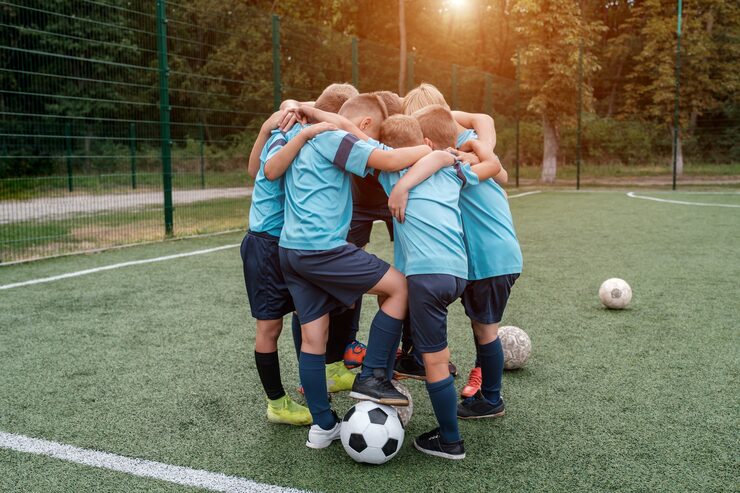
When you think of a childrens football club, the first images that likely come to mind are of children dribbling, passing, scoring goals, and celebrating wins. But behind the drills and matches, something much deeper is happening. In well-structured clubs—like those provided by Children Sports League—children aren’t just learning how to play football. They’re learning how to live.
These clubs are environments where physical activity meets emotional growth, where competition meets compassion, and where winning is celebrated—but learning, teamwork, and resilience are the real goals.
Let’s explore the often overlooked ways in which childrens football training helps shape young lives, well beyond the pitch.
1. Building Character Through Sport
At its core, football is a team sport. And being part of a team means more than just knowing where to pass the ball. In every session, children learn:
a) Respect
They are taught to listen to coaches, communicate with peers, and accept decisions even when they don’t go their way. Whether it’s a referee’s call or a teammate’s mistake, respectful responses are part of the culture.
b) Responsibility
Players are encouraged to take ownership of their actions: arriving on time, bringing their kit, following instructions, and correcting mistakes.
c) Resilience
Football clubs offer a safe space for failure. Children miss goals, make errors, and sometimes lose games. But in doing so, they learn how to bounce back, try again, and improve.
2. Social and Emotional Development
Joining a football club isn’t just a sporting choice—it’s a social one. Children interact with teammates, coaches, and other families. These relationships provide rich opportunities for emotional growth.
a) Communication Skills
Football requires constant communication. Whether calling for a pass or celebrating a teammate’s success, children learn to express themselves clearly and confidently.
b) Empathy and Team Support
Great teams are built on empathy. When a player is struggling, teammates are encouraged to help, not criticize. This promotes kindness, understanding, and peer support.
c) Emotional Regulation
Whether winning or losing, children are taught to manage their emotions—an essential skill both on the pitch and in everyday life.
3. Learning to Lead and Follow
One of the great strengths of football is that it gives every child a chance to experience both leadership and cooperation.
a) Leadership Opportunities
Even at young ages, children are asked to help lead warm-ups, guide younger players, or suggest strategies. These moments build confidence and initiative.
b) Following Instructions
At the same time, players learn the value of listening—both to coaches and peers. They understand that success often comes from following directions and trusting the team.
4. Discipline and Focus
Football training sessions are structured and routine-based. This predictability helps children develop habits of discipline and concentration.
From staying in formation to focusing on specific drills, children gradually learn to:
- Pay attention for longer periods
- Resist impulsive behaviours
- Follow multi-step instructions
- Work through frustration to achieve a goal
In many ways, football becomes a classroom for developing focus and perseverance—skills that directly support success in school and other activities.
5. Inclusive Learning for All Abilities
At Children Sports League, football is for everyone. Clubs are designed to include children of all backgrounds, abilities, and skill levels. This inclusive approach teaches children that:
- Everyone has value, regardless of ability
- Teamwork means supporting each other
- Patience and encouragement make a difference
By learning alongside children with different strengths and challenges, young players develop greater tolerance, humility, and a sense of community.
6. Encouraging Healthy Habits and Lifelong Activity
While emotional and social skills are central, football clubs also lay the groundwork for lifelong physical health.
Children learn to:
- Enjoy regular exercise
- Understand the benefits of warm-up and stretching
- Appreciate how practice improves fitness and skills
- See physical activity as fun, not a chore
Clubs that make football enjoyable and accessible give children a positive relationship with movement—something that can last well into adulthood.
7. Developing a Growth Mindset
One of the most powerful lessons in childrens football training is that effort matters more than talent. Children quickly realise that:
- Skills improve with practice
- Mistakes are normal and useful
- Progress takes time, not shortcuts
This fosters what educators call a “growth mindset”—the belief that abilities can be developed through hard work and perseverance. This mindset is crucial for success in school, hobbies, and eventually careers.
8. Learning Strategy, Not Just Skills
Football isn’t only about technical ability—it’s a thinking game. Even young players are introduced to basic tactics and spatial awareness.
In matches and training, children learn to:
- Read the game and anticipate plays
- Make decisions under pressure
- Adjust their positioning based on the flow of play
- Work together to achieve a shared objective
These strategic skills are intellectually stimulating and help children learn to plan, reflect, and adapt—all key cognitive abilities.
9. Parent and Community Engagement
Many football clubs involve parents, not just as spectators but as part of the learning environment. From helping children prepare for practice to chatting with coaches after training, families become part of the process.
This shared involvement:
- Strengthens parent-child relationships
- Encourages conversation about effort, values, and growth
- Builds a community of support around each child
Some clubs also offer birthday party services, social events, and community days, further connecting families through sport.
10. Expanding Horizons Through Multi-Sport Experiences
While football is the foundation, many clubs (including Children Sports League) offer complementary activities like tennis. Trying a tennis session or even booking a private tennis session allows children to:
- Explore new movement patterns
- Develop individual focus and coordination
- Bring lessons from football (teamwork, discipline) into a new context
This variety helps prevent burnout, supports well-rounded development, and keeps children excited about physical activity.
In the end, football clubs are more than places to train—they’re spaces where children grow as people. They learn what it means to be part of something bigger, how to respect others, how to try and fail and try again, and how to carry themselves with integrity on and off the pitch.
For parents seeking a meaningful, balanced, and enriching environment, clubs that teach more than just the game offer something truly valuable: not just players, but better people.