
Attention Deficit Hyperactivity Disorder (ADHD) affects many school-aged children, impacting their ability to concentrate, follow instructions, and control impulses. While ADHD treatment often includes therapy and, in some cases, medication, physical activity also plays a key role in improving these children’s well-being. Sports offer an excellent opportunity to channel energy and develop cognitive and social skills. Let’s explore how sports can help children with ADHD improve their quality of life.
1. Improving Focus and Attention
One of the biggest challenges children with ADHD face is maintaining focus for extended periods. Structured sports like football and tennis require concentration on various aspects of the game, such as following rules, paying attention to teammates’ movements, and making quick decisions. Participating in a children’s football club or a tennis session can help train their brain to focus on tasks for longer periods.
During football training, for instance, children need to stay aware of several things at once: the ball’s position, the placement of opponents, and the coach’s instructions. This consistent practice can improve their ability to concentrate in other areas of life, such as schoolwork.
2. Developing Impulse Control
ADHD can make it difficult for children to control their impulses and emotional reactions. In sports, it’s important to think before acting, whether it’s waiting for the right moment to pass the ball in football or controlling power when making a tennis serve. By participating in football clubs or tennis lessons, children learn that acting impulsively doesn’t always lead to the best results, which helps them develop self-control over time.
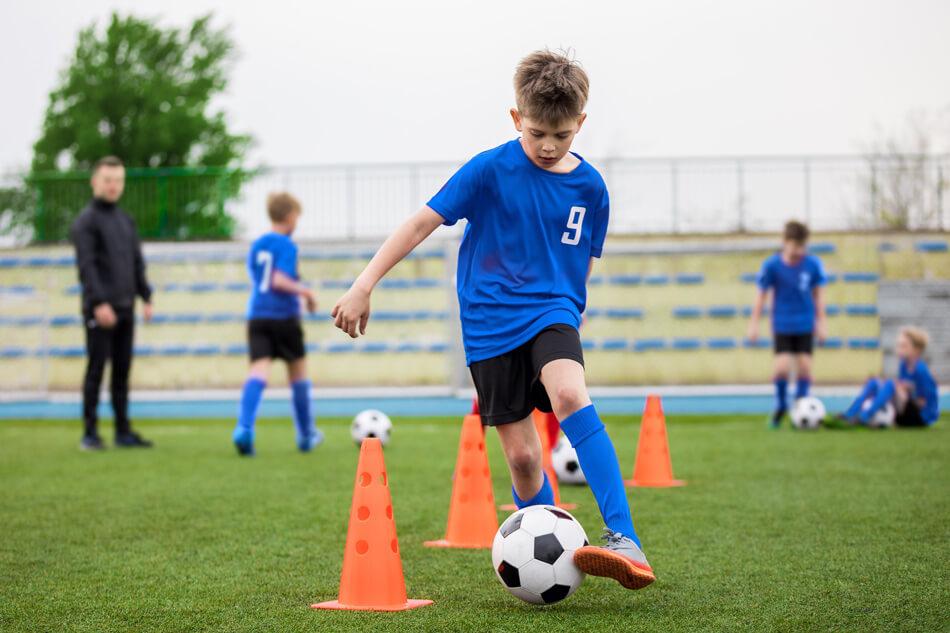
Football is particularly effective in this regard. During children’s football training, players often have to resist the urge to rush straight for the ball or wait for the right moment to shoot. These situations teach patience and the ability to hold back impulses, which are essential skills in everyday life.
3. Releasing Energy in a Healthy Way
Children with ADHD often have high levels of energy, which can lead to restlessness in classrooms or situations that require calm. Playing sports provides a healthy and productive way to burn off this excess energy. Sports like football and tennis, which involve a lot of physical movement, are great for helping a child feel more balanced and less anxious.
A private tennis session, for example, allows the child to channel their energy in a controlled environment, focusing on improving their skills while also releasing that extra energy. This can result in a calmer, more focused child afterward, which benefits both their school and home life.
4. Promoting Social Skills
Children with ADHD often struggle with social interactions, finding it difficult to follow social rules or connect with peers appropriately. Sports naturally help develop social skills, as they require communication, cooperation, and respect for rules. In football, for instance, children learn to work as a team, wait their turn, and resolve conflicts constructively.
Being part of a children’s football club or other team sports allows kids to practice these skills in a safe and supported environment. They learn to read social cues from teammates and adjust to different group dynamics, which can be particularly beneficial for children with ADHD, who may face challenges in social settings.
5. Boosting Self-Esteem
Many children with ADHD experience frustration and low self-esteem, especially when facing academic or social difficulties. Sports provide an opportunity for success outside the classroom. By achieving sports goals, such as improving their football performance or hitting a successful tennis serve, children build confidence in their abilities.
Regular participation in sports like football can lead to tangible achievements, such as scoring a goal or completing a difficult drill during football training. These small victories help boost self-esteem and show the child that, with effort and persistence, they can improve and excel in different areas.
6. Encouraging Discipline and Organization
Children with ADHD often struggle with organization and maintaining routines. Structured sports encourage the development of these skills. Following a practice schedule, preparing for activities, and committing to a team or individual lessons helps the child internalize the importance of discipline.
A private tennis session, for instance, offers individualized attention, allowing for a personalized routine that suits the child’s needs. This creates an opportunity to work on elements like punctuality and preparation for practice, which can be transferred to other areas of the child’s life.
7. Reducing Stress and Anxiety
Many children with ADHD also experience high levels of stress and anxiety due to sensory overload and difficulties adapting to social and academic environments. Sports have the power to relieve these feelings, as they release endorphins, the hormones that promote a sense of well-being.
Physical activities like football and tennis are particularly effective for reducing stress. The repetitive motions and the need for focus help calm the mind. In football, the child can get lost in the rhythm of the game, while in tennis, the focus on the ball and technique can be a form of active meditation, providing a moment of peace and concentration.