
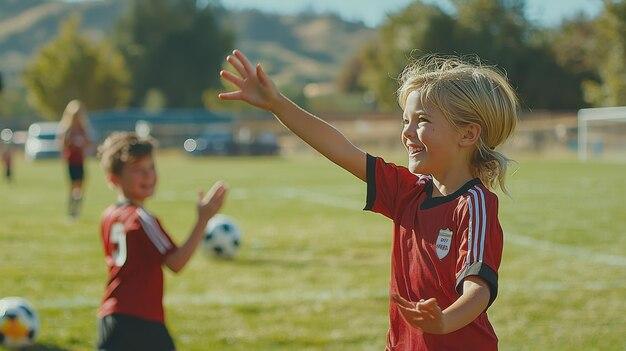
The training of young football players has undergone significant transformations over the years, evolving from basic physical conditioning to sophisticated, science-based methodologies. This evolution reflects a deeper understanding of child development, sports science, and the importance of fostering both technical skills and personal growth in young athletes.
Early Approaches: Basic Conditioning and Unstructured Play
In the early days of youth football, training primarily focused on physical endurance and basic skills. Coaches emphasized running, calisthenics, and simple drills, often without the ball. The sessions were largely unstructured, with minimal attention to individual player development or technical proficiency. This approach treated children as miniature adults, applying adult training methodologies without considering the unique needs of young learners.
The Introduction of Skill-Based Training
The late 20th century marked a shift towards skill-based training, recognizing the importance of technical proficiency in young players. Programs like the Coerver Coaching Method, developed in the late 1970s, emphasized individual ball skills, encouraging players to spend more time with the ball to improve their touch and control. This method advocated for each player having a ball during training, promoting repetition and mastery of techniques.
Incorporation of Cognitive Development
Modern training methodologies have further evolved to include cognitive development, understanding that mental agility is as crucial as physical skills. Coaches like Michel Bruyninckx have pioneered approaches that integrate cognitive exercises with technical training, enhancing decision-making, spatial awareness, and overall game intelligence. This holistic approach aims to develop not just the player’s physical abilities but also their mental acuity, leading to more well-rounded athletes.
Age-Appropriate Training and the Football Development Model
Recognizing that children are not simply small adults, contemporary training programs emphasize age-appropriate methodologies. The Football Development Model, for instance, structures training to align with the developmental stages of children. It focuses on teaching fundamental movements and techniques before progressing to more complex skills, ensuring that young players build a solid foundation. This model promotes a fun and engaging environment, crucial for maintaining children’s interest and passion for the game.
Global Influence and Cultural Integration
The globalization of football has led to the integration of diverse training philosophies. Simon Clifford’s Brazilian Soccer Schools introduced South American techniques to young players in the UK, focusing on flair, creativity, and ball mastery. This cross-cultural exchange has enriched training programs, offering varied approaches that cater to different learning styles and emphasizing the joy of playing.
Technological Advancements in Training
The advent of technology has further revolutionized children’s football training. Tools such as video analysis, wearable fitness trackers, and virtual reality simulations provide coaches and players with detailed insights into performance. These technologies allow for personalized training plans, real-time feedback, and the ability to simulate game scenarios, enhancing both learning and performance.
Emphasis on Enjoyment and Long-Term Development
Today’s training programs prioritize creating an enjoyable experience for young players. By focusing on fun, inclusivity, and a love for the game, these programs aim to keep children engaged and reduce dropout rates. The emphasis is on long-term development rather than immediate success, ensuring that players develop a lifelong passion for football and the associated benefits of physical activity, teamwork, and discipline.
In summary, children’s football training has evolved from basic physical drills to comprehensive programs that address technical skills, cognitive development, and personal growth. This evolution reflects a deeper understanding of how children learn and develop, ensuring that training methods are tailored to foster both athletic proficiency and a lifelong love for the game.