
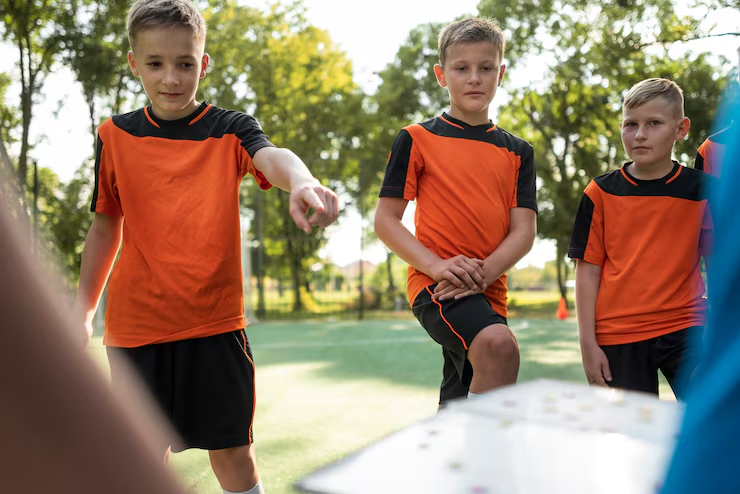
In an era of competitive leagues, early specialization, and performance tracking, it’s easy to forget why kids start playing sports in the first place: because it’s fun. Whether it’s a childrens football club or a local tennis session, sports are meant to bring joy, friendship, movement, and discovery. Yet, as children progress through regular football training or take part in a private tennis session, the fun can sometimes be overshadowed by pressure—often unintentionally created by adults.
Making sports enjoyable while encouraging growth is a delicate balance. Parents and coaches play a key role in ensuring that kids stay motivated, excited, and free from unnecessary stress. Here’s how to make sure that children love the game, learn from it, and keep coming back for more—without feeling overwhelmed.
1. Focus on Play, Not Performance
The most effective way to keep sports fun is by prioritizing play over performance. Kids learn best when they’re playing freely, exploring their abilities, and trying new things without fear of making mistakes.
In a childrens football training session, for example, letting kids create their own mini-games, switch positions, or set playful challenges helps build creativity and independence. Similarly, during a tennis session, coaches can use games like “tennis tag” or “balloon tennis” to make learning footwork and coordination more engaging.
The key is to avoid overemphasis on technical perfection. Skills develop naturally over time, especially when children are relaxed and having fun.
2. Praise Effort Over Outcome
A child who hustles during a match, shows good sportsmanship, or keeps trying despite challenges deserves just as much recognition—if not more—than one who scores a goal or wins a point. When parents and coaches praise effort, kids learn that their value doesn’t come from winning but from trying hard and enjoying the process.
In both football clubs and tennis programs, coaches who celebrate determination, teamwork, and improvement tend to see happier, more confident kids. These players aren’t afraid of failing because they know they’re being supported for who they are, not what they achieve.
Even in private tennis sessions, where the one-on-one format can easily lead to perfectionism, it’s important to highlight progress and persistence instead of just flawless technique.
3. Create a Low-Stress Environment
Children absorb the energy around them. If a parent is tense on the sidelines or a coach becomes visibly frustrated, kids quickly feel the pressure—even if nothing is said aloud.
To keep sports fun, it’s essential to create a calm, encouraging environment. That means cheering for all players, not criticizing referees, and maintaining a positive tone during car rides home from games or lessons.
Football training should feel like a safe place to try, fail, laugh, and improve. Likewise, tennis sessions should offer space for kids to experiment with new skills and make mistakes without judgment.
Even competitive matches can be framed as opportunities to learn rather than “do or die” moments. When adults stay relaxed, kids stay relaxed too.
4. Let Kids Lead
One of the best ways to remove pressure is to give children more control over their sports experience. Let them choose the position they want to try in football. Let them decide which skill to focus on during a private tennis session. Encourage them to set their own goals, even if they’re small—like learning to do five keepy-uppies or mastering a serve.
This autonomy builds confidence. It also teaches children that their voice matters and that their sports journey belongs to them—not to anyone else.
In childrens football clubs, good coaches often rotate players through different roles so each child experiences both leading and supporting. In tennis, coaches can tailor sessions to reflect the child’s curiosity rather than just following a rigid plan.
5. Avoid Comparing Children
Every child develops at their own pace. Comparing one player’s speed or skills to another’s creates an environment of judgment rather than support.
This is especially important in football training, where children may progress at different rates due to age, physical development, or confidence levels. It’s equally true in tennis, where some kids may grasp stroke technique quickly while others need more time to refine movement.
Instead of saying, “Look how well Jamie plays, you should do that too,” try saying, “I love how hard you’re working—keep going!” This subtle shift in language makes a big difference.
In group tennis sessions and football classes, it’s the responsibility of coaches to manage varying abilities with empathy, ensuring that no child feels “behind” or left out.
6. Celebrate Fun, Not Just Wins
The best memories from childhood sports are rarely about final scores. They’re about the friendships, the silly warm-ups, the team huddles, and the unexpected moments of joy—like a defender scoring a goal or a serve finally going over the net after ten tries.
Highlighting these moments keeps the atmosphere lighthearted and inclusive. It tells children that success is defined by the fun they’re having, not by how they rank.
After a football club match, ask your child what their favorite part was—not whether they won. After a tennis session, talk about what made them laugh or what they’re excited to try next time.
When joy is the goal, confidence follows naturally.
7. Build a Culture of Encouragement
One of the strongest ways to keep sports enjoyable is to foster an environment where kids lift each other up. Team spirit, kindness, and shared celebration all play a part in this.
During football training, coaches can create partner drills where kids praise each other’s efforts. In tennis sessions, rally-based games where cooperation—not competition—is the goal help build friendships and mutual respect.
Even in private tennis sessions, coaches can encourage kids to reflect on what they’re proud of, reinforcing internal motivation over external praise.
When encouragement comes from teammates and coaches, it creates a positive feedback loop where everyone feels valued.
8. Allow Room for Breaks and Balance
Burnout is a real risk—even for children. When sports become a chore instead of a joy, it’s time to reassess. Not every week has to be packed with practices or competitions. Kids need rest, free play, and time to pursue other interests too.
Encouraging a healthy balance doesn’t mean a child isn’t committed. It means they’re being set up for long-term love of the sport. Many successful athletes had childhoods full of variety, not constant intensity.
A child who takes a break from a childrens football club or misses a tennis session for a birthday party or a holiday shouldn’t feel guilty. They should feel supported in having a well-rounded life.
9. Adjust Expectations to the Child’s Age and Stage
A 5-year-old in their first football training session shouldn’t be expected to understand tactics or maintain focus for an hour. Similarly, a 7-year-old in a tennis session will have completely different attention and coordination levels than a pre-teen.
Keeping expectations age-appropriate reduces pressure. It also helps adults be more patient and responsive to what kids truly need in the moment.
Celebrate small wins. For a young footballer, that might be remembering to stay in position. For a beginner tennis player, it could be making contact with the ball.
Matching the challenge to the child’s developmental stage ensures growth without frustration.
10. Model the Right Attitude
Children watch how adults behave. If they see their parent yelling from the sidelines, questioning the coach, or criticizing their own performance, they begin to mirror that pressure.
On the other hand, when adults smile, cheer supportively, laugh off mistakes, and focus on the experience rather than the outcome, kids are more likely to do the same.
In football clubs and tennis sessions, children whose parents model calm, kind, and resilient behavior tend to enjoy their sport more—and stick with it longer.
Even when kids are in private tennis sessions, a parent’s attitude before and after the lesson can set the tone for how the child feels about their performance.