
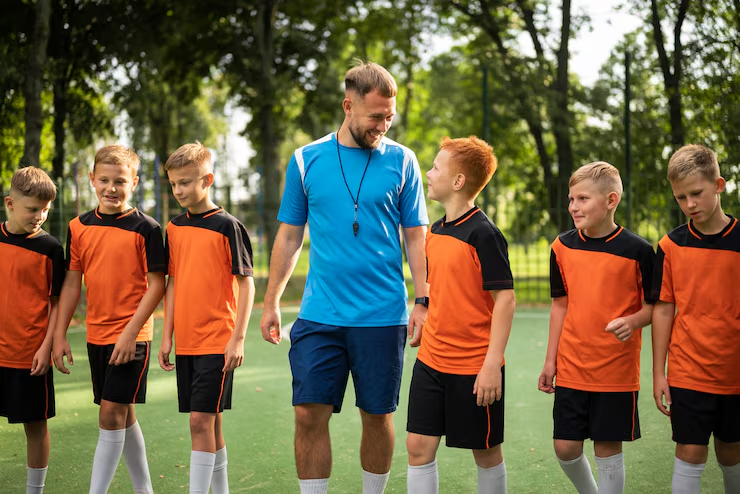
In every successful sporting journey, there’s usually one person who stands out—not because they scored goals or won trophies, but because they believed, guided, and inspired. That person is often the coach. For young athletes, especially those in childrens football clubs or early tennis sessions, the coach becomes more than an instructor—they become a role model, shaping not just skills, but character.
While parents provide the foundation of values and emotional support, sports coaches offer something uniquely powerful: real-time leadership, accountability, and a consistent presence outside the home and school environment. The impact of a good coach can echo far beyond the football pitch or tennis court, influencing how a child sees themselves, others, and the world around them.
Here’s why coaches matter so deeply—and how their influence extends beyond the sport.
1. Coaches Model Discipline and Consistency
In the structured world of childrens football training and tennis sessions, consistency is king. Coaches are often the ones who model punctuality, preparedness, and follow-through—values that children quickly begin to emulate.
When a coach arrives early, sets up drills, and expects focus, children learn that effort matters. When they see a coach stick to routines and calmly enforce rules, they begin to understand the power of discipline.
Over time, this consistency builds trust. Children learn that showing up regularly, giving their best, and respecting structure is not only expected—it’s rewarding. The coach doesn’t just teach drills; they show what it means to be committed.
2. Coaches Teach Through Example
A coach’s behavior is a daily lesson in how to act under pressure. Whether it’s how they respond to a loss, handle a disagreement with a referee, or motivate a tired team, their reactions are absorbed by young athletes like a sponge.
In football clubs, a coach who encourages fair play after a heated match is silently teaching sportsmanship. In a private tennis session, a coach who celebrates a mistake as part of the learning process is modeling resilience.
Children imitate the people they admire. When they see their coach behaving with kindness, integrity, and patience, they internalize those traits. A good coach doesn’t just say the right things—they show how to live them.
3. Coaches Encourage Confidence and Self-Belief
One of the greatest gifts a coach can offer is belief—a belief in a child’s potential before the child sees it for themselves. Coaches see strengths that children may overlook. They recognize courage in a missed shot, creativity in a risky pass, and progress in every small improvement.
In childrens football training, a coach’s “well done” after a great effort can light up a child’s entire day. In tennis sessions, a coach who patiently works through a challenging technique helps a child feel capable, not defeated.
These moments build more than sports skills—they build self-worth. A child who feels valued by a coach is more likely to try harder, take risks, and bounce back from failure. That confidence doesn’t stay on the field—it follows them into school, friendships, and life.
4. Coaches Shape Team Culture and Relationships
In football clubs, coaches are the architects of team culture. They set the tone for how players treat one another—whether that’s through pre-game rituals, post-match debriefs, or how they manage competition and play time.
A coach who celebrates teamwork over individual glory creates a culture where children lift each other up. One who emphasizes effort over results teaches that success is a journey, not a number. These values sink in over time and help children build healthy, supportive relationships.
Even in private tennis sessions, the coach models a respectful, trust-based relationship that can shape how children interact with authority figures and peers. How a coach gives feedback, handles mistakes, and celebrates effort becomes a blueprint for how kids engage with others in their lives.
5. Coaches Provide a Safe Space Outside of Home and School
For many children, the sports field is a refuge—a space where they feel seen, accepted, and supported. Coaches play a vital role in creating this environment.
In childrens football clubs, a good coach makes sure every child feels included, regardless of ability. They balance fun with structure and encourage participation over perfection. In tennis sessions, they provide focused, individualized attention that helps quieter children feel valued.
Coaches who foster emotional safety help children open up. They create an environment where it’s okay to fail, okay to ask questions, and okay to be yourself. In some cases, especially for children struggling with confidence or social challenges, this may be the only place where they feel truly safe and successful.
6. Coaches Guide Children Through Challenges
All athletes—young or old—face setbacks. Missed goals, tough matches, conflicts with teammates, or even personal doubts. Coaches help children navigate these moments not by solving their problems, but by guiding them toward resilience.
In football training, a child who consistently struggles with positioning might want to give up. A coach who takes the time to explain, demonstrate, and encourage teaches perseverance. In private tennis sessions, frustration might build when a serve won’t land. A coach who calmly breaks down the process and keeps spirits high helps turn that frustration into growth.
Through these moments, children learn how to respond to failure, regulate emotions, and keep trying—skills that matter far beyond sport.
7. Coaches Are Mentors in Character, Not Just Sport
Some of the most important lessons coaches teach have nothing to do with footballs or tennis rackets. They teach about honesty—by admitting their own mistakes. About courage—by encouraging risk-taking without fear. About empathy—by noticing when a child is down and offering support.
Over time, children absorb these values and begin to practice them. They help a teammate up. They speak kindly in tough situations. They learn to look beyond the scoreboard and see the bigger picture.
In many childrens football clubs, coaches also take time to talk about respect, fairness, and effort. These moments—often brief but powerful—stick with kids. And the message becomes clear: who you are as a person matters more than how well you play.
8. Coaches Inspire Lifelong Habits
The daily habits reinforced by a coach—warming up, practicing consistently, respecting others, reflecting after performance—become part of a child’s long-term mindset. Coaches introduce structure and self-discipline in a natural, engaging way.
Children who stick with football training or tennis sessions often develop routines they carry into academics, health, and relationships. They learn to set goals, work steadily toward them, and adapt along the way.
When coaches connect physical effort with personal growth, kids begin to see sport as more than just a game—it becomes a lifelong foundation for success.
9. Coaches Represent Possibility
For many children, especially those from underserved communities or with few role models, coaches represent a path forward. They show that it’s possible to pursue dreams, overcome obstacles, and become something more.
Even if a child never plays professionally, a coach can still be a symbol of leadership, dedication, and resilience. This is especially true in childrens football clubs, where community and belonging are as important as athletic development.
In tennis, where the sport can sometimes feel solitary, a coach provides connection—a reminder that no dream is too big, and no mistake is too final.
10. Coaches Leave a Lasting Legacy
Ask an adult about a role model from childhood, and you’ll often hear about a coach. Not necessarily the one who won the most matches, but the one who cared. The one who listened. The one who believed.
That’s the legacy coaches leave. Long after the boots are hung up or the racket is put away, the lessons remain.
A child may forget the drills or the match scores. But they’ll remember the coach who told them, “You’ve got this.” The one who reminded them to be kind. The one who showed up—week after week—with encouragement, patience, and respect.