
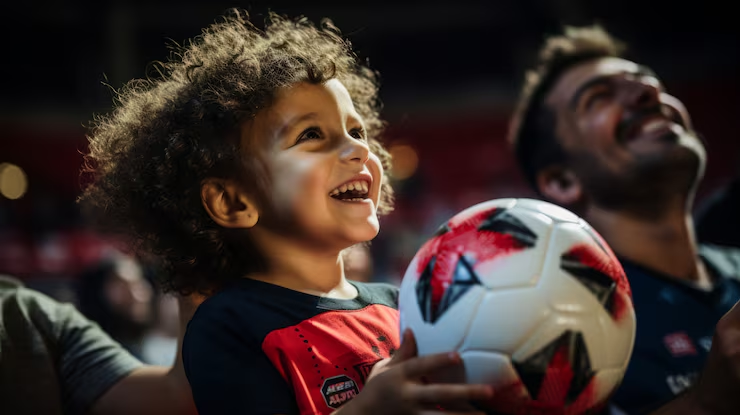
When children dash across the pitch during football training, it might look like nothing more than an exciting game. But there’s far more happening than meets the eye. Those drills, sprints, and team talks are doing something remarkable: they’re preparing kids to succeed in school, at home, and in life.
A well-run childrens football club is a launchpad not only for athletic ability but for personal growth. The discipline, cooperation, focus, and emotional resilience that young players develop during training sessions are tools they carry into every corner of their daily lives. Football isn’t just shaping their skills with the ball—it’s shaping their future.
Discipline That Translates Beyond Sports
One of the first things children learn in football training is structure. Arriving on time, wearing the right gear, listening to instructions, and participating fully—all of these actions are rooted in discipline.
This kind of consistent routine helps children build self-control and accountability. They begin to understand the value of preparation, punctuality, and respect for rules—skills that are essential in the classroom, at home, and later in the workplace.
Coaches in football clubs reinforce these habits subtly, through repetition and positive reinforcement. For example, a player might be reminded to line up properly or to listen when others are speaking. Over time, these moments become second nature.
The structure in childrens football training mirrors the kind of discipline needed to complete homework, follow school schedules, and meet daily responsibilities. Kids don’t just learn how to train; they learn how to manage themselves.
Confidence That Grows With Each Session
Every small success in football—whether it’s a well-placed pass, a successful tackle, or scoring a goal—builds a child’s confidence. These moments affirm that effort leads to improvement and that progress is possible.
Confidence built on the pitch naturally spills into other areas of life. A child who feels competent during football training is more likely to speak up in class, try new activities, or approach challenges with a positive mindset.
This transformation is particularly noticeable in children who start off timid or anxious. With encouragement from coaches and peers, they gradually find their voice and step into leadership roles.
Confidence also flourishes in other sporting contexts, like during a tennis session. The individual nature of tennis, especially in a private tennis session, allows children to take ownership of their progress. This sense of personal growth strengthens their belief in their own abilities.
Emotional Intelligence in Motion
Emotional development is one of the lesser-known but incredibly powerful benefits of football. In a team environment, children constantly deal with emotions: excitement, frustration, disappointment, pride. Through football training, they begin to understand and regulate these feelings.
When a player misses a penalty or loses possession, they experience a wave of disappointment. But instead of withdrawing or giving up, they’re encouraged to keep going. This resilience is one of the most important emotional tools a child can develop.
Childrens football clubs provide a safe space for emotional learning. Coaches model appropriate reactions and help kids label their feelings: “It’s okay to be upset—it means you care.” This open approach helps children become more emotionally aware and self-regulating.
And because football is a team sport, players must also become aware of the emotions of others. They learn empathy by comforting a teammate who made a mistake or by adjusting their behavior for the good of the group.
This kind of emotional intelligence—understanding your own feelings and responding to those of others—is crucial not only in childhood but throughout life.
Communication and Social Skills on the Rise
Football is a non-stop conversation. On the pitch, players must shout for the ball, call out warnings, signal positions, and cheer each other on. These interactions are more than noise—they’re building blocks of communication.
For younger children or those still developing verbal skills, football clubs offer a natural setting for language practice. Instructions from coaches, encouragement from teammates, and game-time strategy all provide real-life, high-energy opportunities to speak and listen.
In childrens football training, even shy or socially anxious kids often find their voices. The shared purpose of the game makes communication feel less intimidating and more necessary.
Off the field, this boost in communication translates to improved participation in group activities, better peer relationships, and stronger engagement in classroom discussions.
Sports like tennis also nurture these skills in different ways. In a tennis session, children learn to listen carefully to coaching and provide feedback. A private tennis session can help more reserved children build communication confidence in a one-on-one environment before they transition to larger social settings.
Problem-Solving and Critical Thinking
Football isn’t just physical—it’s strategic. Players must constantly assess the field, anticipate the opponent’s moves, and decide when to pass, shoot, or hold possession. Every game becomes a living puzzle.
This type of real-time decision-making develops critical thinking skills. In football training, children are taught to analyze situations quickly and act decisively, all while managing pressure and time constraints.
These are the same cognitive skills used in school when solving math problems, writing essays, or participating in group projects. The more children practice quick thinking and adaptive strategies during sports, the more naturally they apply them elsewhere.
In tennis, the challenge is similar but focused on individual problem-solving. A child in a private tennis session learns to adjust their serve, read their opponent, and modify their play style to stay in the game. These experiences build flexible, creative thinking that extends beyond the court.
Leadership and Responsibility
Every child has leadership potential. Sports help uncover and nurture it. In childrens football clubs, leadership can be as simple as setting an example during warm-ups or encouraging a teammate who’s feeling down.
Over time, coaches may assign specific roles—like being captain for the day or leading a drill. These small but meaningful opportunities teach kids to take initiative, guide others, and accept responsibility.
Being part of a team also means being responsible for your role. If you’re the goalkeeper, your team relies on you. If you’re a midfielder, your decisions affect the whole game. This sense of responsibility fosters accountability and maturity.
And in sports like tennis, where individual performance matters even more, children in a private tennis session learn that their focus, effort, and attitude directly influence their outcome. They begin to take responsibility not only for results but for how they respond to setbacks.
Respect and Sportsmanship
In every football training session, children are reminded of the importance of respect—respect for coaches, teammates, opponents, and the rules of the game. These lessons are reinforced through repetition and modeled behavior.
Good football clubs use sport as a vehicle to teach values like fairness, integrity, and humility. Children learn that the referee’s decision stands, even if they disagree. They learn to shake hands after the game, win or lose. They learn to praise effort, not just talent.
These are the foundations of good character. A child who learns to respect others on the pitch is more likely to do so in school, at home, and in future relationships.
In tennis, sportsmanship is equally important. Players learn to make fair line calls, admit faults, and respect the rhythm of play. In a tennis session, especially one-on-one, coaches emphasize patience, honesty, and ethical behavior—all lessons that last a lifetime.
Building Habits That Support Long-Term Success
Perhaps the greatest benefit of childrens football training is the formation of positive habits. Regular practice, goal setting, and self-reflection become part of a child’s lifestyle.
These habits translate into school success: finishing homework on time, studying regularly, and setting academic goals. They also build emotional resilience and mental discipline, helping kids cope with challenges and setbacks in any setting.
Just like brushing teeth or reading before bed, attending football clubs or a tennis session becomes a ritual that supports physical and mental well-being.
And for children who may need extra attention or a customized pace, a private tennis session or small-group football class provides the same developmental benefits in a more focused, personalized setting.
Read More In: How Childrens Football Training Builds Social Skills and Teamwork