
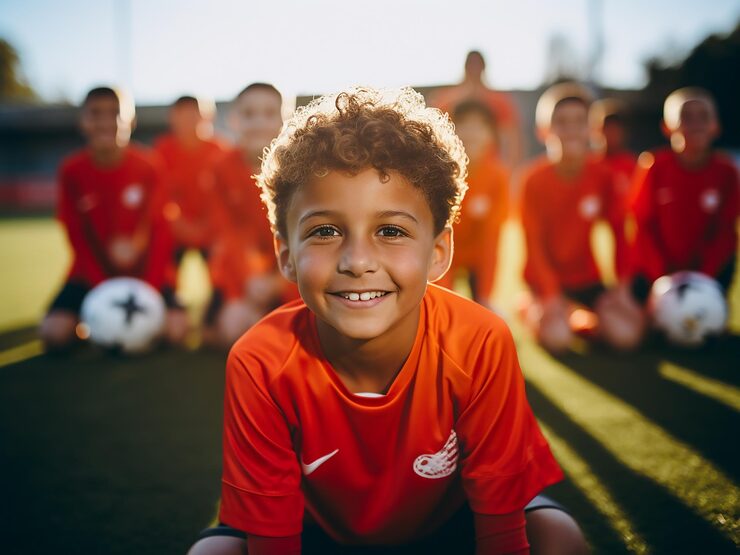
For children, play is more than just fun—it’s how they learn about the world. And when play is combined with thoughtful structure, as in children’s football training, it becomes a powerful tool for development. Structured football training offers a dynamic way for children to enhance both their social and motor skills in an engaging and supportive environment.
While many parents sign their kids up for football to burn off energy or try out a sport, the benefits go far deeper. Underneath every pass, dribble, and team huddle lies a world of developmental opportunities that shape how children move, think, and connect with others.
The Power of Structure in Learning
Before diving into the specifics of motor and social skill development, it’s important to understand what makes structured football training different from unstructured play.
In a children’s football club, training sessions are typically designed by physical education professionals who understand child development. These sessions follow a clear plan, with warm-ups, skill drills, tactical activities, and mini-games. Each component is purposeful, targeting specific skills and gradually increasing in complexity as children progress.
This consistency helps children feel secure—they know what to expect and what is expected of them. In a structured setting, learning becomes more efficient, habits are reinforced, and progress can be measured over time.
Developing Gross Motor Skills
Football is one of the most effective sports for developing gross motor skills, which involve the large muscles of the body. These skills are crucial in early childhood and form the foundation for physical activity later in life.
During a typical football training session, children run, jump, kick, twist, and balance. These movements build strength, coordination, and endurance. Young players learn how to move efficiently, control their bodies, and react quickly to changing situations—whether it’s avoiding an opponent or sprinting to the ball.
The repetition and variation in drills help refine these movements. For instance:
- Dribbling drills improve foot-eye coordination.
- Passing in motion enhances balance and timing.
- Shooting develops leg strength and spatial awareness.
The structured approach ensures that these exercises are performed safely and correctly, minimizing the risk of injury and maximizing physical development.
Enhancing Fine Motor Skills Through Precision
While football is mostly a gross motor sport, it also supports the development of fine motor skills, especially in younger children.
Activities like controlling the ball with different parts of the foot, stopping it precisely, or making a gentle pass require careful coordination. These skills, though subtle, engage smaller muscle groups and demand concentration and control—traits that are equally important when holding a pencil or tying shoelaces.
Structured training encourages these micro-adjustments by challenging children to complete specific tasks: “Can you stop the ball inside the circle?” or “Pass it just far enough for your teammate to reach.”
Over time, children become more aware of their own body movements and improve their control, which supports tasks both on and off the pitch.
Building Balance and Body Awareness
Structured football clubs also help children develop proprioception—the sense of where your body is in space. This is key for balance, agility, and injury prevention.
Football demands constant body adjustments. A child must shift their weight quickly to change direction, maintain posture while kicking, or recover after a fall. These actions teach the body how to respond smoothly and efficiently.
Structured training sequences, such as agility ladders, cone drills, or one-legged balance games, are especially effective in fine-tuning these skills. Coaches guide players through movements that gradually build their ability to stay balanced while staying active.
Social Skills: Learning Through Teamwork
Perhaps the most visible benefit of children’s football training is the boost in social skills. Football is a team sport, and structured training naturally creates opportunities for children to interact, cooperate, and build relationships.
Every session encourages teamwork. Whether it’s a simple passing drill or a five-a-side scrimmage, players must communicate, make joint decisions, and support one another. Coaches often assign roles or challenges that require pairs or groups to work together, fostering collaboration and peer interaction.
Children learn valuable social skills such as:
- Taking turns and sharing
- Listening to instructions and peers
- Respecting boundaries and rules
- Offering encouragement and dealing with frustration
In a structured football environment, these lessons are gently guided by coaches, who model respectful communication and reinforce positive behaviour.
Emotional Development Through Play
Social development isn’t just about interacting with others—it’s also about managing one’s own emotions. Football training offers a safe space for children to experience success, disappointment, excitement, and pressure in a healthy and supportive context.
Missing a shot, being substituted, or losing a game are all opportunities for emotional growth. Coaches help children process these emotions constructively—acknowledging their feelings, helping them reflect, and encouraging resilience.
Over time, children develop emotional regulation—the ability to control their responses, stay calm under pressure, and bounce back after setbacks. These skills are essential not only in sports but in school, friendships, and family life.
Communication and Language Development
Children’s football clubs also play an underrated role in language development. During training, children are exposed to a wide range of communication scenarios—from listening to coach instructions, to calling out for passes, to discussing tactics with teammates.
This active use of language, especially in dynamic and unpredictable situations, helps children:
- Expand their vocabulary (e.g., directions, positions, movements)
- Practice giving and following instructions
- Develop clarity in speech and active listening
- Learn non-verbal cues such as gestures and eye contact
For children who may be shy or have speech delays, structured football training provides a motivating and natural way to practice communication in a social setting.
Confidence Through Achievement
As children develop their motor and social skills, they also begin to experience a boost in self-confidence. Structured training provides measurable progress: dribbling becomes smoother, passes more accurate, and games more intuitive. These visible improvements reinforce a child’s belief in their own ability.
Small wins—like scoring a goal, mastering a new drill, or being praised by a coach—build a sense of competence. Children begin to trust themselves and feel proud of their efforts.
This confidence often spills into other areas of life, from trying new things at school to making new friends at the playground. A child who feels capable on the football pitch often feels capable elsewhere, too.
A Space for Inclusion and Belonging
A key strength of structured football training is its ability to include children of all backgrounds and abilities. Whether a child is naturally athletic, still developing coordination, or working through social challenges, a well-run football club provides structure and support to help them succeed.
Many clubs offer tiered sessions or small group training to ensure children get the attention they need. Some even provide private football training for children who benefit from a quieter setting or more tailored guidance.
This inclusive approach helps all children feel that they belong. They’re not just participants—they’re team members. They have a place, a role, and a community that values them.
Complementing Football with Other Activities
While football provides a rich environment for development, it’s also beneficial to offer children a variety of sports. Many clubs now incorporate additional programs, like tennis, to further support motor and social growth.
A structured tennis session complements football by engaging different muscles and focusing on one-on-one skills like focus, hand-eye coordination, and control. For children who thrive with personal attention, a private tennis session can build specific motor skills at a pace that suits them.
The variety ensures that children remain engaged and continue developing holistically. It also gives them the freedom to discover what they enjoy most—whether that’s the team dynamic of football or the individual challenge of tennis.
Creating a Lifelong Foundation
Structured football training lays a foundation for lifelong physical activity and social well-being. Children who enjoy sports from a young age are more likely to stay active, make healthy choices, and carry positive habits into adulthood.
More importantly, the motor and social skills they develop through football prepare them for all areas of life. From classroom interactions to personal challenges, the lessons learned on the pitch serve them far beyond childhood.
By focusing on growth, connection, and enjoyment, a quality children’s football club ensures that every child—not just the most athletic—benefits from the game.