
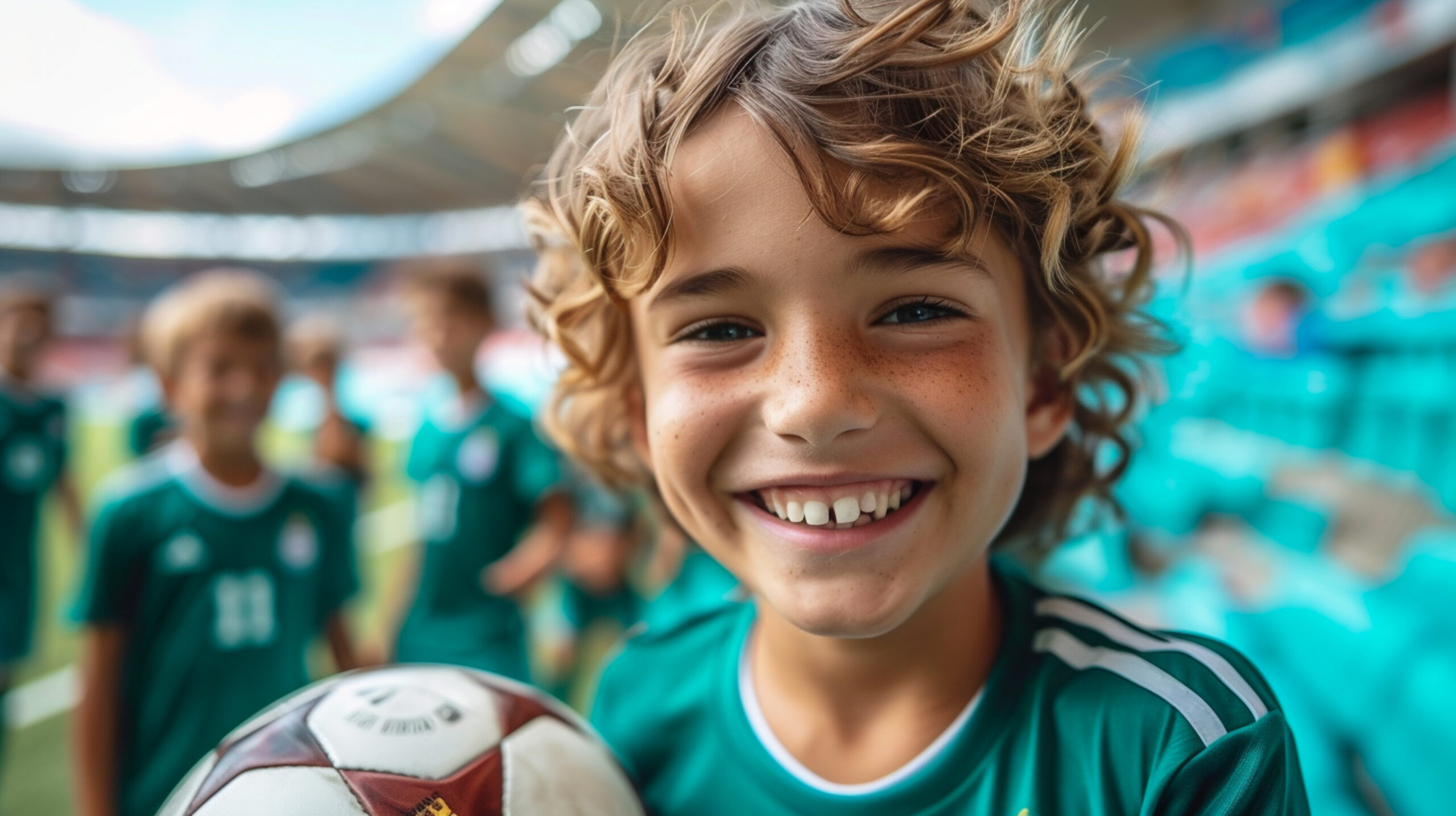
Childhood is a stage filled with discovery. It is a time when children learn not only about the world around them, but also about themselves, their bodies, their emotions, and the way they connect with others. In this journey, sport can play a remarkably important role. Among the many activities available to young children, Childrens football training stands out as one of the most dynamic and accessible ways to support both social and motor development in a natural, enjoyable, and highly engaging environment.
Football has a special way of drawing children in. The movement, the teamwork, the excitement of chasing the ball, and the simple joy of play all combine to create an activity that feels fun first and educational second. Yet beneath the surface of every session, children are practising skills that can influence many areas of their growth. This is why so many parents are increasingly interested in finding a Childrens football club that offers much more than just exercise.
At an early age, children are still developing the foundations of movement. Running, turning, balancing, stopping suddenly, changing direction, and coordinating both sides of the body are all essential parts of physical development. Football naturally encourages these actions. During Football training, children are constantly adjusting their movement in response to the ball, the space around them, and the other players in the group. What looks like a simple game often becomes a powerful learning experience for the body.
Motor development is usually divided into two broad areas: gross motor skills and fine motor skills. Football mainly strengthens gross motor skills, which involve larger body movements using the legs, arms, and core. In Childrens football training, children sprint, jump, twist, kick, and maintain balance during active play. These repeated actions help improve coordination, agility, posture, and body control. As these abilities improve, children often become more confident in other physical activities too, whether that means riding a bike, joining playground games, or trying a different sport later on.
Balance is one of the most important physical abilities children develop through football. To kick a ball effectively, a child must stand on one leg while controlling the movement of the other. This may seem simple to adults, but for young children it is a complex skill that involves concentration, coordination, and core strength. Through repeated practice in a supportive setting, children gradually become more stable and controlled in their movement. A well-designed Childrens football club session will include playful drills that strengthen this balance without making it feel repetitive or demanding.
Agility is another key area supported by Football training. Football is not a static sport. Children move in all directions, react quickly, and adapt to new situations every few seconds. One moment they are running forward, the next they are turning, slowing down, or changing course completely. These movements help the brain and body work together more efficiently. Over time, children begin to move with greater ease and awareness, which can benefit them in school sports, dance, playground activities, and everyday life.
Coordination is deeply linked to success in early childhood movement, and football gives children countless opportunities to improve it. Dribbling a ball while looking up, listening to instructions while moving, and working out when to pass or shoot all require multiple actions at once. These experiences strengthen hand-eye and foot-eye coordination, timing, and reaction speed. In Childrens football training, these skills are developed through playful repetition, making progress feel exciting rather than pressured.
What makes football especially valuable is that physical development does not happen in isolation. Every movement in a football session is often connected to communication, problem-solving, and cooperation. Children are rarely just running. They are running while listening, thinking, sharing space, and responding to others. That is where the social benefits begin to shine.
For many children, joining a Childrens football club is one of their first experiences of being part of a structured group outside school or nursery. This can be incredibly valuable. In a football setting, children learn how to take turns, follow routines, listen to instructions, and participate as part of a team. These moments may seem small, but they create strong foundations for social confidence. A child who learns to wait patiently for their turn in a drill is also learning self-control. A child who cheers for a teammate is learning empathy and encouragement.
Teamwork is at the heart of Football training. Even in the earliest age groups, children begin to understand that success is not only about individual effort. They learn that passing the ball, sharing opportunities, and supporting others are all part of the experience. This helps children shift from a naturally self-focused perspective toward greater awareness of the people around them. In many ways, football becomes a practical classroom for cooperation.
Communication also develops naturally during football sessions. Children speak to coaches, respond to instructions, call to teammates, and gradually learn how to express themselves more clearly in a group setting. Some children arrive feeling shy or uncertain, especially in unfamiliar environments. But because football is active and playful, it often removes some of the pressure that can come with more formal social settings. A child may find it easier to connect with others while moving, laughing, and playing than while sitting in a circle and being asked to talk. This is one reason Childrens football training can be especially helpful for children who need a confidence boost.
The emotional side of social development is just as important. Football introduces children to a wide range of feelings: excitement, frustration, pride, nervousness, determination, and joy. Learning how to handle these emotions in a healthy setting is a powerful part of growing up. In a positive Childrens football club, children are encouraged to keep trying, to accept mistakes, and to celebrate effort as much as outcome. These lessons can shape resilience in a meaningful way.
Resilience is often built in small moments. Missing the ball, losing possession, or not scoring can feel disappointing at first. But in a supportive environment, children learn that setbacks are part of learning. Coaches play an essential role here. By using encouragement, patience, and age-appropriate activities, they help children understand that improvement comes through practice. This can change a child’s relationship with challenge. Instead of fearing mistakes, they begin to see them as part of progress.
Friendship is another beautiful outcome of regular Football training. Shared experiences help children bond quickly. Laughing during games, celebrating goals, and learning side by side can turn teammates into friends. These friendships are often built on participation rather than pressure, which makes them feel natural and lasting. Parents frequently notice that children look forward to sessions not only because of the sport itself, but because they enjoy seeing familiar faces and feeling part of a group.
A strong Childrens football club also supports children in understanding rules and boundaries. Every sport has structure, and this can be incredibly helpful for young minds. Learning when to start, when to stop, how to respect space, and how to play fairly all contribute to a child’s broader understanding of behaviour in group settings. These lessons often transfer into school and home life. The discipline learned through sport is rarely harsh or rigid when taught well. Instead, it becomes a natural outcome of participation, routine, and positive reinforcement.
One of the most interesting things about Childrens football training is that it can support children with different personalities and needs. Energetic children often benefit from having a healthy outlet for movement and focus. More cautious children can build confidence gradually through repeated exposure and success in manageable activities. Socially outgoing children may enjoy the teamwork and shared energy, while quieter children may find connection through play without needing constant conversation. This flexibility is part of what makes football such a valuable childhood activity.
Parents sometimes compare football with other developmental activities, and it is true that many sports offer excellent benefits. A Tennis session, for example, can be wonderful for coordination, concentration, and individual skill development. A Private tennis session may provide one-to-one support that helps a child refine technique and confidence at their own pace. These experiences can be highly valuable, especially for children who enjoy a more focused or individual learning environment. However, football offers a different kind of developmental richness because it combines movement with ongoing group interaction in a particularly lively way.
This does not mean one sport is better than another in every case. Rather, it highlights how Football clubs can offer a unique blend of social and motor learning that many children thrive in. The constant movement, shared goals, and spontaneous nature of the game encourage children to think, move, and interact all at once. For children in their early years of development, this combination can be especially beneficial.
Another important point is enjoyment. Children learn best when they are engaged. If an activity feels forced or overly serious too soon, the developmental benefits may be reduced because the child is not emotionally invested. Good Childrens football training places fun at the centre of the experience. Games, imaginative challenges, and praise-based coaching help children associate movement with happiness. This positive emotional connection can encourage a lifelong relationship with physical activity.
That long-term impact matters. When children enjoy movement early on, they are more likely to remain active as they grow. They begin to see exercise not as a chore, but as something connected to fun, friendship, and achievement. This mindset can influence health habits far beyond childhood. A child who has positive memories from a Childrens football club may carry that confidence into school teams, community sports, or simply an active everyday lifestyle.
The role of the coach should never be underestimated in this process. Skilled coaches understand how to create sessions that are both structured and playful. They know how to adapt activities for different ages and abilities, and they recognise that not every child develops at the same pace. In effective Football training, the coach becomes more than an instructor. They become a guide, an encourager, and often a key part of the child’s growing confidence.
Parents also benefit from observing the developmental progress that football can bring. Many notice improvements not only in physical coordination, but in listening skills, independence, and willingness to join in with others. A child who once hesitated to enter a group may begin to run onto the pitch with enthusiasm. A child who struggled with coordination may become noticeably more balanced and agile after regular sessions. These changes do not happen overnight, but they are often visible over time in subtle and meaningful ways.
The best Football clubs for children understand that development is not about creating elite players as early as possible. It is about nurturing happy, capable, confident children through movement and play. When football is introduced in the right way, it becomes much more than a sport. It becomes a setting where children explore teamwork, strengthen their bodies, build communication skills, and discover the joy of learning alongside others.
In a world where childhood can sometimes become overly scheduled or screen-focused, the simple experience of running across a pitch, working with teammates, and learning through play feels more valuable than ever. Childrens football training offers children a chance to grow in ways that are active, social, and deeply enjoyable. Every pass, every run, every shared moment on the field contributes to something bigger: the steady, exciting development of skills that support both body and mind.
That is why so many families continue to value the experience provided by a quality Childrens football club. It is not only about kicking a ball. It is about giving children the chance to develop coordination, confidence, friendships, resilience, and a lasting love for movement through an activity that feels like play but offers so much more.