
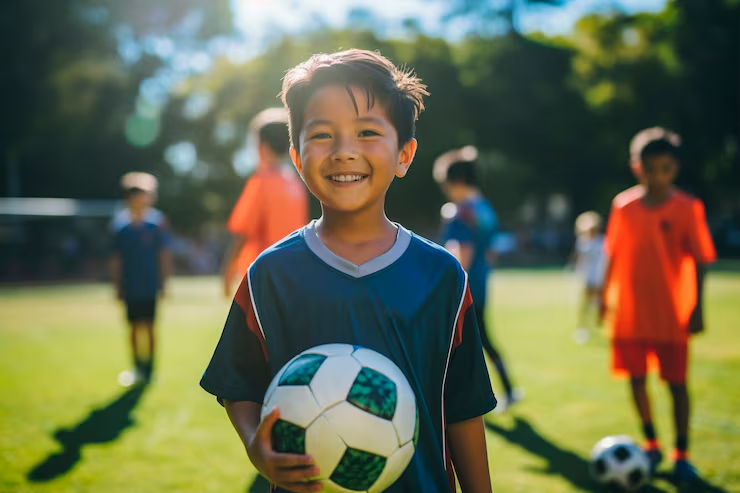
It’s easy to think of children’s sports as just an outlet for burning energy or a fun weekend activity. But behind the goals scored and tennis balls served lies a deeper, more powerful impact. For children between the ages of 2 and 12, engaging in structured physical activity—whether through a childrens football club or a regular tennis session—offers critical developmental benefits that go far beyond fitness.
In the early years of a child’s life, their brain and body are developing at an incredible rate. Introducing them to sports during this period can lay the foundation for skills that last a lifetime—social, cognitive, emotional, and physical.
Moving the Body, Building the Brain
At first glance, childrens football training might seem all about running drills and scoring goals. But these repetitive, skill-based activities are actually stimulating the brain as much as the body.
When a child learns to dribble a football or swing a tennis racket, they’re not just moving—they’re making complex neural connections. These movements improve hand-eye coordination, balance, and spatial awareness. Research shows that children who participate in early sports programs develop better motor planning abilities, which helps them in daily tasks such as writing, tying shoelaces, or even problem-solving.
This is especially true in sports like tennis, where players must constantly anticipate the ball’s direction and adjust their movements in split seconds. A weekly private tennis session can fine-tune these skills even further by providing one-on-one attention tailored to a child’s developmental stage.
Learning to Work with Others
Childhood is the perfect time to learn how to navigate social interactions. Sports are one of the most effective ways to teach teamwork, cooperation, and communication. In a childrens football club, kids quickly realize that success depends on working together—passing the ball, supporting teammates, and celebrating wins as a group.
Even children who are naturally shy can blossom in a team sport setting. The shared goal of a game often creates an instant bond between players. And because these interactions are physical as well as verbal, they’re ideal for younger children who are still developing language skills.
Tennis, though often seen as a solo sport, can also be incredibly social. Doubles matches and group training sessions encourage collaboration, sportsmanship, and shared responsibility. For those who may need a bit more guidance in these areas, a private tennis session can help build confidence before transitioning into a group environment.
Emotional Growth Through Wins and Losses
One of the most overlooked aspects of early sports participation is emotional development. Life is full of ups and downs, and sports provide a controlled environment where children can begin to experience both in a healthy way.
In football training, a child might score a goal and feel the thrill of success one moment—and then miss an important pass and feel disappointment the next. These small emotional swings offer powerful lessons in resilience, humility, and self-regulation.
Learning how to handle mistakes, support others who are struggling, and manage frustration are invaluable life skills. Coaches in well-run football clubs are trained to guide children through these moments with empathy and encouragement, turning each challenge into a teachable moment.
Tennis also teaches emotional discipline. A missed serve or a lost set in a tennis session can be tough on young players, but with the right support, it becomes an opportunity to learn perseverance and mental focus. This is especially important in one-on-one settings like private tennis sessions, where children learn to be accountable for their performance without external blame.
Establishing Healthy Routines and Habits
Habits formed in childhood often stick for life. Introducing regular football training or tennis sessions into a child’s weekly schedule helps normalize physical activity, making it a natural part of their routine.
This is more important now than ever. With screens increasingly dominating kids’ free time, the structure and excitement of sports offer a much-needed balance. Participating in a childrens football club means that kids look forward to being active. It’s not a chore—it’s fun.
Even better, it helps children begin to understand the importance of consistency. Training sessions, warm-ups, and cool-downs all contribute to a child’s understanding of responsibility, time management, and preparation.
For families with busy schedules or children with specific learning styles, a private tennis session can offer the same benefits in a more flexible format. These sessions can be tailored to focus on specific goals, whether that’s improving fitness, enhancing technique, or just having fun in a one-on-one environment.
Boosting Cognitive Skills Through Play
One of the most fascinating discoveries in recent years is the connection between physical activity and academic performance. Sports like football and tennis aren’t just good for the body—they’re brain boosters.
Through the structured play found in football clubs, children develop better focus, improved memory, and stronger problem-solving skills. Games require players to think ahead, make quick decisions, and adapt to changing situations. These are the same cognitive abilities that help children succeed in the classroom.
In a tennis session, players must track fast-moving objects, adjust their stance, and plan strategic shots—all within seconds. This kind of mental agility translates directly into sharper thinking and better learning outcomes.
Even more impressively, studies have shown that kids who engage in early sports training show improvements in executive function—a set of mental skills that include working memory, flexible thinking, and self-control.
Encouraging Independence and Responsibility
Children thrive when they feel capable and independent. Sports provide a natural setting for developing these traits. From packing their own football boots to remembering the rules of the game, kids quickly learn to take ownership of their actions.
In childrens football training, coaches often rotate leadership roles among players—like being the team captain for the day or leading warm-up exercises. These small moments help build a sense of responsibility and pride.
Similarly, during a private tennis session, a child has the unique opportunity to lead their learning experience. The coach might ask them to set personal goals, evaluate their progress, or even help design part of the session. These decisions empower children to become active participants in their own development.
A Safe Environment to Try, Fail, and Try Again
Unlike many school settings where there’s pressure to perform, sports offer a forgiving space where mistakes are expected and even encouraged. A missed shot in football or a double fault in tennis isn’t a failure—it’s just part of learning.
That mindset is crucial during early childhood, when kids are still forming their self-image. In a childrens football club, kids are encouraged to experiment, take risks, and explore new techniques. Coaches provide constructive feedback, but also celebrate effort and creativity.
In football training sessions designed by experienced physical education professionals, activities are adjusted to each child’s level. This ensures every player feels included and challenged without being overwhelmed.
The same principle applies in tennis. Whether it’s a group class or a private tennis session, children learn that progress is more important than perfection. They’re taught to focus on their personal best, not just winning.
Final Thoughts
The role of sports in early childhood goes far beyond fitness and fun. It’s about shaping confident, resilient, and well-rounded individuals. Whether through the camaraderie of a childrens football club, the focus of a private tennis session, or the excitement of weekly football training, children gain skills that prepare them for every aspect of life.
These early experiences with sports set the stage not just for future athletic success, but for a lifetime of healthy habits, positive relationships, and a strong sense of self.