
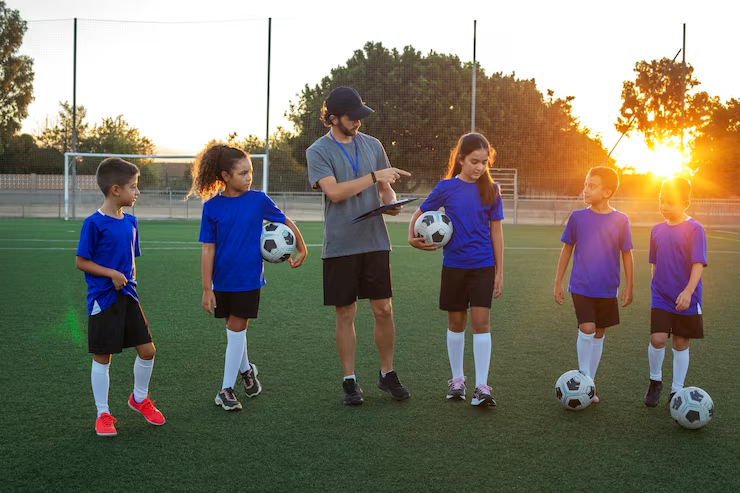
Watching a child grow through regular football training is like observing a tree take root, sprout leaves, and eventually blossom. At first, their steps may be unsure, their kicks awkward. But with time, guidance, and consistency, those same children begin to move with confidence, purpose, and creativity. The evolution is not just physical—it’s social, emotional, and cognitive.
Childrens football clubs are more than just a weekly activity. They are nurturing grounds where motor skills are sharpened, friendships formed, and life lessons learned. As the weeks and months unfold, children transform—not just as players, but as individuals. Here’s how regular football sessions support this remarkable journey of development.
The Early Stages: Foundations and First Touches
For many young players, childrens football training begins as early as 3 or 4 years old. At this stage, the focus is entirely on fun, familiarity with the ball, and basic movement.
Children are introduced to simple concepts like dribbling, stopping the ball, and changing direction. But beyond the obvious football skills, they’re developing something even more important: body awareness. Running, turning, balancing, and jumping help build core strength and coordination. These are the building blocks of all athletic activity, and football provides an ideal platform for mastering them.
Coaches use imaginative games—like pretending the football is a spaceship or navigating an obstacle course—to make the sessions engaging and age-appropriate. What looks like play is actually structured football training, tailored to early childhood development.
Emotionally, this is also where kids learn to separate from their parents, follow basic instructions, and begin to understand teamwork in its simplest form: sharing space and time with others.
Developing Technical Skills and Game Understanding
As children grow—typically around ages 6 to 9—their physical and cognitive capabilities evolve significantly. In these years, regular football training introduces more advanced techniques such as controlled passing, shooting with accuracy, and simple defensive strategies.
Children now begin to understand the “why” behind drills. Why pass instead of dribble? Why stay in position? Why move off the ball? These questions signal the beginning of tactical thinking.
At this stage, repetition becomes a powerful learning tool. Regular attendance at childrens football clubs allows kids to repeat drills in a variety of contexts, helping solidify muscle memory and reaction time. The consistency also provides a sense of security. The child knows the coach, the teammates, the structure—and that familiarity supports learning.
Their decision-making on the pitch starts to sharpen. They begin to recognize patterns, anticipate movements, and make quick choices. The more regularly they train, the quicker these instincts develop.
Emotional Growth and Resilience
The emotional development that comes through football training is just as significant as the physical. Children who train regularly start to understand how to manage their emotions in high-stakes or fast-moving environments.
They learn how to handle a missed goal, how to bounce back after a tough match, and how to support teammates during difficult moments. This resilience, built in the safety of a structured environment, becomes one of the most transferable skills learned in sport.
Through repeated experiences—wins and losses, good days and challenging ones—children develop coping mechanisms. They begin to see that mistakes are part of the process, not something to fear. Regular exposure to these situations teaches persistence, a trait that benefits them in school, friendships, and beyond.
Social Skills and Team Dynamics
One of the most overlooked benefits of regular childrens football training is the development of social intelligence. Kids who train together week after week build bonds that go beyond the pitch. They learn to communicate, cooperate, and support one another, regardless of whether they are best friends off the field.
As children participate in structured drills and match situations, they naturally develop leadership, conflict resolution, and empathy. They learn to listen to their coach, respect different personalities, and recognize the value of each teammate’s contribution.
In football clubs, this teamwork evolves with age. Younger children may learn to take turns and share the ball. Older kids begin to understand tactical collaboration—setting up plays, tracking back in defense, and executing coordinated movements.
The regular rhythm of training reinforces these lessons. It’s not a one-off experience. It’s a weekly opportunity to practice, fail, learn, and succeed in a social environment.
Physical Maturation and Athleticism
By the time children reach 10 to 12 years old, the benefits of regular football training become even more pronounced. Their bodies are growing, and their coordination is maturing. This is when athleticism begins to emerge more clearly—speed, agility, stamina, and strength all improve with consistent training.
Children at this age can handle longer drills, more intense matchplay, and specific position-based instruction. Training sessions begin to resemble the structure of older competitive teams, with more emphasis on strategy and execution.
The evolution here is not just about physical ability, but also awareness. Children start to sense the tempo of the game. They recognize space, timing, and the flow of movement. With each football training session, their game intelligence increases.
Importantly, children who’ve had years of foundational training tend to have fewer injuries. Their bodies have adapted gradually, and their muscle memory is well developed. They’ve learned the importance of warm-ups, stretching, hydration, and listening to their bodies—habits that stay with them for life.
Confidence and Self-Esteem
Confidence doesn’t come from being the best. It comes from knowing you’ve worked hard, improved, and earned your place. Regular football training gives children that sense of earned confidence. They see their progress over time—whether it’s finally scoring with their weaker foot, making a smart pass under pressure, or simply keeping up with a fast-paced game.
This sense of achievement builds self-esteem. Children begin to trust their abilities and feel proud of their growth. Coaches play a key role here, offering encouragement that is specific and sincere: “Great positioning on that play,” or “You really improved your first touch today.”
Confidence gained in a childrens football club often extends to school, family life, and other extracurricular activities. Kids who feel capable on the pitch are more likely to try new things off it.
Creativity and Individual Style
Football is often seen as a team sport, and it is—but within that framework lies a world of individual expression. As children gain confidence and technical skills, they begin to develop their own style of play.
Maybe one child is a clever passer with a calm demeanor. Another might be bold and aggressive, unafraid to take on defenders. With regular football training, these styles begin to emerge naturally.
Coaches who give space for creativity—rather than over-coaching every movement—allow children to explore what makes them unique players. Over time, kids learn to trust their instincts, try new things, and even invent their own techniques.
This creative evolution is one of the most joyful parts of long-term football development. It’s the moment when a child realizes that football isn’t just something they do—it’s something they do in their own way.
Setting Goals and Measuring Growth
Regular training allows for consistent goal setting. Children can work toward specific milestones—improving their passing accuracy, developing stamina, learning to switch play—and see tangible progress over time.
This teaches delayed gratification, a skill increasingly rare in a world of instant results. Children learn that big improvements come from small steps taken regularly.
In private sessions, coaches may use individualized tracking to help children measure progress more precisely. But even in group football clubs, regular feedback and reflection help children understand how far they’ve come—and where they want to go next.
Long-Term Love for the Game
Perhaps the most important outcome of regular childrens football training is that it lays the foundation for a lifelong love of the game. When kids train regularly in a positive, engaging environment, they associate football with joy, growth, and community.
This emotional connection keeps them involved in sport—even as life becomes more complicated. It means they’re more likely to stay active in their teens, play socially as adults, or even become coaches themselves.
The journey from first touch to fluent player is full of milestones, setbacks, breakthroughs, and memories. But one thing is clear: when children engage in football training consistently, their skills evolve in every direction—physically, emotionally, socially, and mentally.