
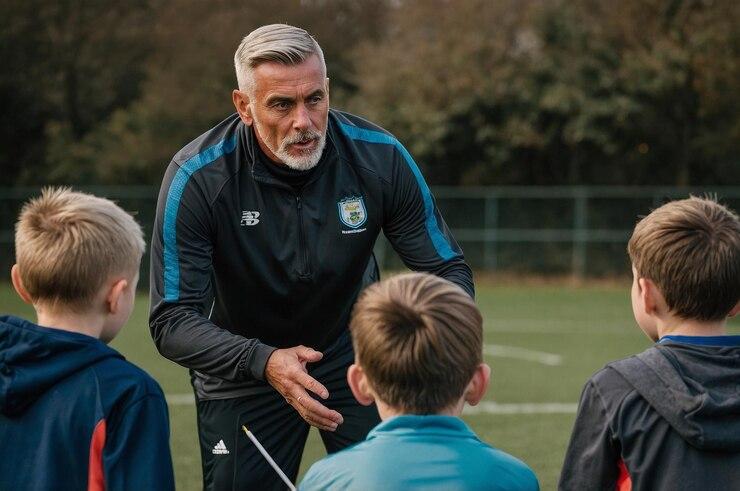
Walk onto any field during a childrens football training session or step into a tennis session today, and you’ll quickly notice how different youth sports coaching has become compared to a decade or two ago. Gone are the days of rigid drills, monotonous repetition, and a “win at all costs” mentality. Modern coaching is dynamic, child-focused, and grounded in the latest research on physical development, psychology, and learning methods.
This shift in approach isn’t just about producing better athletes—it’s about nurturing happier, healthier, and more resilient young people.
From Command-Style to Child-Centered Coaching
Traditional coaching often involved a command-style approach: the coach dictated every move, players followed instructions, and deviation was rarely encouraged. Today’s coaches in football clubs and tennis programs understand that this method doesn’t always align with how children learn best.
Modern coaching emphasizes a child-centered model. This approach focuses on the individual needs, learning styles, and developmental stages of each child. Whether in a private tennis session or childrens football club, coaches aim to create environments where kids are active participants in their learning, not passive receivers of information.
Learning Through Play: The Game-Based Approach
One of the most significant evolutions in coaching is the widespread adoption of the game-based approach. Rather than endless lines of drills, children now learn through playing modified games that mimic real situations.
In childrens football training, this might look like small-sided games that emphasize passing, movement, and decision-making under pressure. Kids learn tactics and techniques organically as they play.
A tennis session might include rally-based games, point challenges, or target competitions that develop skills while keeping the energy high and the atmosphere fun. This playful approach improves engagement, understanding, and retention.
Focus on Holistic Development
Modern coaches understand that they are developing more than just athletic skills. The focus has expanded to include physical, emotional, social, and cognitive development.
In a childrens football club, sessions might include team-building activities that foster leadership, empathy, and cooperation. Meanwhile, during a private tennis session, a coach may work not only on a child’s serve but also on goal-setting, self-reflection, and mental focus.
This holistic approach prepares children not just to be better athletes, but to thrive in school, relationships, and future challenges.
Adapting to Learning Styles
No two children learn the same way. Some are visual learners who benefit from demonstrations, others are kinesthetic learners who need to feel the movement, and some process instructions best when they hear them.
In childrens football training, a coach might demonstrate a skill for some, then guide others through it step by step. In a private tennis session, a coach can tailor instruction to match how the child learns, offering immediate feedback, video analysis, or playful analogies to explain techniques.
This flexibility in coaching helps every child reach their potential, regardless of how they absorb information.
The Rise of Positive Reinforcement
Gone are the days when mistakes were met with harsh criticism or running laps as punishment. Modern coaching relies heavily on positive reinforcement, where effort, improvement, and resilience are praised just as much—if not more—than outcomes like goals or wins.
In a football club, a child might receive praise for making a smart pass, even if it didn’t lead to a goal. In a private tennis session, a coach might celebrate the fact that the player attempted a difficult serve, regardless of whether it went in.
This focus builds confidence, reduces fear of failure, and encourages risk-taking—an essential part of learning and growth.
Individualization Within Group Settings
Even within group environments like childrens football training, today’s coaches are skilled at individualizing attention. They recognize that some players might need more help with footwork, while others are ready for tactical challenges.
Similarly, a coach in a tennis session might provide one child with more technical focus on their backhand while encouraging another to work on their foot positioning. The ability to adapt within the same session is a hallmark of modern coaching excellence.
Integrating Technology and Feedback Tools
Another evolution in coaching is the use of technology. Coaches now incorporate video analysis, slow-motion feedback, and even apps that track progress.
In a private tennis session, watching a replay of a serve can help a child understand how their body is positioned at the point of contact. In football training, coaches might use tablets to show positioning during a play or use fitness trackers to monitor movement patterns.
This immediate, visual feedback helps children correct mistakes faster and reinforces the learning process.
Prioritizing Mental Wellbeing
Mental health and emotional wellbeing are front and center in modern coaching philosophy. Coaches now understand that pressure, fear of failure, and anxiety can hinder performance and enjoyment.
In a childrens football club, sessions often include stress-free games, mindfulness moments, or casual chats that help kids decompress. Similarly, in a private tennis session, a coach may integrate breathing techniques, visualization exercises, or mental rehearsal strategies to build not only physical skills but mental toughness.
Focusing on Long-Term Athletic Development
Modern coaching isn’t just about winning the next game—it’s about the long-term journey. Coaches follow principles of Long-Term Athletic Development (LTAD), which focus on age-appropriate training for physical, technical, tactical, and psychological growth.
For younger players in childrens football training, this means prioritizing basic movement skills like running, jumping, and balancing before introducing complex tactics. In tennis sessions, young children might focus on ball tracking, hand-eye coordination, and playful movement patterns before formal match play.
This developmental approach reduces the risk of burnout, overuse injuries, and stress, while ensuring steady, sustainable progress.
Coaches as Mentors and Role Models
Perhaps the most meaningful evolution in coaching is the recognition of the coach’s role as a mentor. Today’s coaches are more than instructors—they’re trusted adults who guide children not only in sport but in life.
In a football club, the coach might be the first person to teach a child about perseverance, respect, and responsibility. In a private tennis session, the coach often becomes a mentor who listens, encourages, and inspires a child to believe in their own abilities.
This mentorship fosters strong, supportive relationships that can have lasting positive impacts on a child’s self-esteem, resilience, and outlook on life.
A Future Focused on Growth and Joy
The evolution of coaching reflects a broader cultural shift toward understanding what children truly need to thrive. The best football clubs, childrens football training programs, and tennis sessions are now grounded in the belief that sports should be as much about joy, growth, and life skills as they are about performance.
Young athletes today benefit from a world where learning is playful, mistakes are opportunities, and every child—whether on the football pitch or the tennis court—is seen, supported, and celebrated for who they are.
Read More In: The Importance of Teamwork in Children’s Football Clubs