
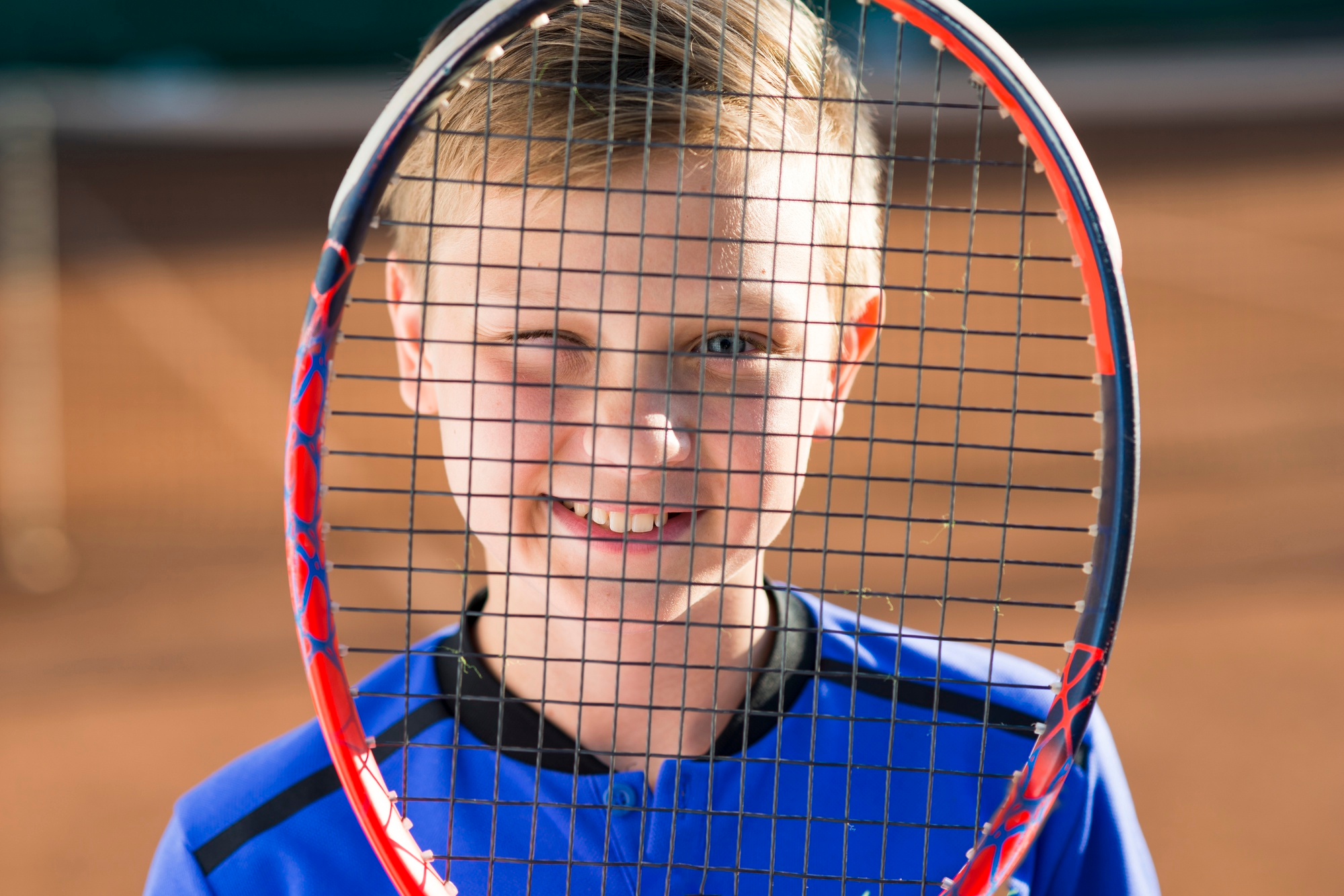
Two children can walk onto the same tennis court with completely different ways of learning. One may enjoy being surrounded by other players, laughing through games and watching friends attempt the same challenges. Another may concentrate better when the court is quieter and the coach can spend more time working directly with them.
Neither approach is automatically better.
A Private tennis session and a group Tennis session simply create different learning environments. Both can help children develop coordination, confidence, movement skills and an understanding of tennis, but they often do so in different ways.
For parents, understanding these differences can make it easier to recognise which environment suits a child at a particular stage. Some children thrive in groups from the beginning. Others prefer individual attention while they become familiar with the racket and ball. Many enjoy a combination of both.
The important question is not necessarily which type of lesson produces the fastest improvement. It is which environment keeps the child interested, comfortable and willing to keep learning.
Individual Lessons Allow the Pace to Follow the Child
One of the clearest differences in a Private tennis session is that the activity can move almost entirely according to one child’s needs.
Imagine a beginner who finds it difficult to judge where a bouncing ball will land.
In a group, the coach may spend some time helping with that skill before moving everyone onto another activity.
In an individual lesson, however, the coach can remain with the same challenge for longer.
The ball can be rolled first.
Then gently thrown.
Later, it can be fed from a short distance.
The activity can become slightly harder only when the child appears ready.
The opposite is also possible.
If a young player understands something very quickly, there is no need to wait for the rest of a group before progressing.
A new challenge can immediately be introduced.
This flexibility allows tennis instruction to respond continuously to the child.
Group Lessons Bring Social Learning Onto the Court
A group Tennis session offers something that individual instruction cannot fully reproduce: interaction with several other children.
Players take turns, work with partners, watch each other and participate in shared games.
These experiences add a social dimension to learning.
A child may need to wait while another player completes a challenge.
They might encourage a partner during a rally.
Perhaps they work together to collect a certain number of points or try to beat a group record.
Children are therefore learning about more than tennis.
They are practising patience, communication and cooperation.
For children who enjoy being around others, this social energy can make the court especially exciting.
Sometimes simply seeing another child attempting the same difficult skill provides encouragement.
If their friend keeps trying, they may want to try again too.
Private Coaching Can Provide More Repetition
Learning tennis requires repetition.
Children need opportunities to track balls, move into position, swing the racket and experience different types of contact.
During a Private tennis session, one child receives almost every ball.
That can create considerably more opportunities to repeat a particular movement.
A coach can feed ten balls towards the forehand side, adjust something small and then immediately provide another ten attempts.
There is very little interruption.
This repeated contact can be useful when a child is developing a specific skill.
However, repetition is most effective when the child remains interested.
Young players are unlikely to benefit from simply hitting hundreds of identical balls if their attention has disappeared.
Individual tennis lessons for children can still include target games, imaginative challenges and movement activities to keep the repetition enjoyable.
Groups Add Useful Variety
Group sessions are naturally less predictable.
Different children hit balls at different speeds and angles. A partner might accidentally send the ball somewhere unexpected. One activity may involve several players moving around the same area.
Although this can occasionally look less organised than individual practice, the unpredictability can be useful.
Tennis itself is unpredictable.
Players eventually need to react to balls that do not arrive perfectly.
During a group Tennis session, children can encounter a wider range of situations.
They learn to adjust.
The perfect ball they expected might become a much shorter one. A rally partner may hit slightly too far to one side. Players have to move and find solutions.
That adaptability is an important part of learning the sport.
Watching Other Children Can Be a Learning Tool
Children do not learn only when they are personally holding the racket.
They can also learn through observation.
In group lessons, players regularly see other children attempt the same activities.
Sometimes they see success.
Sometimes they see mistakes.
Both can be useful.
A child may notice that another player moves closer before hitting a short ball.
They might watch someone successfully complete a challenge and think, “I could try that.”
They may also discover that everybody misses occasionally.
This last lesson can be surprisingly important.
A child who worries about making mistakes may feel reassured when they realise that other players are learning too.
Group Tennis session activities can make improvement feel like a shared process rather than an individual test.
Individual Attention Can Help With Technical Details
As children become more experienced, small technical adjustments can sometimes make movements easier.
Perhaps a player’s racket position is making it difficult to control the ball.
Maybe their feet are consistently too close together.
A Private tennis session gives the coach time to observe these details carefully.
Because there is only one player to watch, feedback can be immediate and specific.
The coach can demonstrate the movement, allow the child to try it and then adjust the next activity according to what happens.
For younger beginners, however, technical instruction should still remain age-appropriate.
Children do not necessarily need a detailed explanation of every element of a forehand.
Often a simple instruction such as “finish your racket over here” is much easier to understand.
Individual attention works best when it simplifies learning rather than overwhelming the child with information.
Group Games Can Make Practice Feel Like Play
Children often bring more energy to activities when other children are involved.
A simple target game can suddenly become extremely exciting when two teams are trying to knock down their cones.
A balance challenge becomes funnier when everyone is trying not to drop the ball from their racket.
Group tennis allows coaches to use this social excitement as part of the learning process.
Games may involve points, teams or cooperative challenges.
Children become focused on the objective, while underneath the game they are practising tennis skills.
A child trying desperately to hit a cone may actually be working on racket control and accuracy.
Someone racing between stations may be developing agility and balance.
The learning is hidden inside the play.
Confidence Can Develop Differently in Each Environment
Confidence is another area where both approaches have advantages.
Some children feel more confident in a Private tennis session because there is no group watching them.
They can miss the ball several times without worrying about what another child might think.
The quieter environment allows them to experiment freely.
A supportive coach can celebrate small improvements and gradually introduce more difficult challenges.
Other children gain confidence through group participation.
They enjoy being part of something.
Seeing another beginner struggle with exactly the same skill can make their own difficulties feel normal.
When they successfully complete an activity, they may enjoy sharing that achievement with friends.
Confidence therefore does not come from one particular lesson format. It depends partly on the child’s personality and how comfortable they feel in each environment.
Some Children Concentrate Better Individually
Group environments contain distractions.
There are other rackets moving, balls bouncing across the court and children talking.
For many young players, that atmosphere is part of the fun.
For others, it can make concentrating difficult.
An individual Tennis session creates fewer competing demands for attention.
The child can focus primarily on the coach, the ball and the activity.
Instructions can also be adapted to their particular communication style.
If they respond better to demonstrations than verbal explanations, the coach can use more visual instruction.
If they need extra time to process an activity, the pace can slow.
This can make an individual environment particularly useful when a child benefits from more focused attention.
Other Children Concentrate Better in Groups
Interestingly, the opposite can also be true.
Some children become more engaged when other players are present.
A challenge completed alone may feel repetitive, while the same challenge in a group suddenly becomes exciting.
The social energy helps maintain attention.
Children may watch carefully because they want to know when their turn is coming.
They may concentrate on the rules because they want their team to succeed.
This is why learning styles can be difficult to predict.
The quietest environment is not automatically the environment with the greatest concentration.
The best setting is the one that gives a particular child a meaningful reason to stay involved.
Private Sessions Can Work on Specific Goals
Individual lessons can be particularly useful when there is a clear skill a child wants to explore.
Perhaps they want to become more confident serving.
Maybe rallies regularly break down because they struggle with backhand shots.
A Private tennis session can devote substantial attention to that area.
The coach can design a series of activities that gradually develop the skill without needing to divide attention across several players.
This does not mean every individual lesson needs a serious technical objective.
The goal might simply be increasing confidence with the ball.
For a beginner, being able to maintain a short rally can be just as meaningful as learning a particular stroke.
Group Sessions Introduce Different Playing Partners
Tennis changes depending on who is standing on the other side of the net.
One child may hit softly.
Another sends the ball higher.
Someone else might naturally play faster.
Group lessons expose children to these differences.
During partner activities, coaches can rotate players so children experience several styles.
This can develop adaptability.
Instead of becoming comfortable only with balls delivered by one coach, children learn to react to shots from other young players.
There is also a social benefit.
Changing partners encourages children to communicate with different people rather than always remaining with the same friend.
Waiting Can Be Useful—Within Reason
Group lessons naturally involve some waiting.
While one player is hitting, another may be preparing for their turn.
Too much waiting can reduce activity and attention, particularly among young children.
Well-designed sessions therefore keep queues short and create activities where several children can participate simultaneously.
Yet small amounts of waiting can still teach something.
Children practise patience.
They watch another player.
They learn that everybody gets an opportunity.
A group Tennis session can teach these social routines while keeping children active for most of the lesson.
Individual Sessions Can Respond Quickly to Emotions
Children do not arrive at every sports lesson feeling exactly the same.
One week they may be energetic and ready for challenges.
Another week they may be tired or hesitant.
During a Private tennis session, the coach can immediately adjust the lesson.
If concentration is lower, activities can become shorter and more playful.
If the child arrives especially enthusiastic, a bigger challenge might be introduced.
The emotional pace of the session can therefore follow the individual player quite closely.
This responsiveness can help maintain a positive relationship with the sport.
Groups Can Create Friendships Around Tennis
One of the strongest advantages of group lessons happens between the tennis activities.
Children meet familiar faces each week.
They talk while collecting balls.
They laugh when a game takes an unexpected turn.
They celebrate successful rallies.
Over time, the tennis court can become a social environment where friendships grow naturally.
A child might originally attend because they want to learn tennis but later look forward just as much to seeing the other players.
Those relationships can increase motivation to keep participating.
A Combination Can Offer Different Experiences
Children do not necessarily need to choose one format permanently.
A player might attend regular group lessons while occasionally having a Private tennis session to spend more time on a particular skill.
Another child could begin individually until they feel confident with the basic equipment and later move into group sessions.
The most appropriate balance can change with age, experience and personality.
What works wonderfully at six years old may feel completely different at nine.
The useful question is often not “Which lesson format is best?” but “What does this child need from tennis right now?”
Perhaps they need confidence.
Maybe they need more social interaction.
They could benefit from additional technical practice or simply want more opportunities to hit balls.
Different lesson environments can provide different answers.
Enjoyment Still Matters in Both
Whether children are learning alone or alongside several other players, enjoyment remains important.
A technically perfect lesson that makes a child dread returning to the court is unlikely to create a lasting interest in tennis.
Young players need opportunities to explore, make mistakes and experience success.
A group Tennis session can provide laughter, teamwork and friendly challenges.
A Private tennis session can offer personal attention, rapid adjustments and goals designed specifically for one child.
Both can include games.
Both can develop coordination.
Both can create confidence.
And both can give children that distinctive moment of satisfaction when the racket meets the ball exactly as they hoped.
The routes may look different: one court might be filled with several children calling scores, collecting balls and cheering one another, while another contains a child and coach quietly attempting to beat a personal rally record. Yet in both settings, learning grows through the same collection of small experiences—watching, moving, missing, adjusting, trying again and gradually discovering that something difficult is becoming easier.