
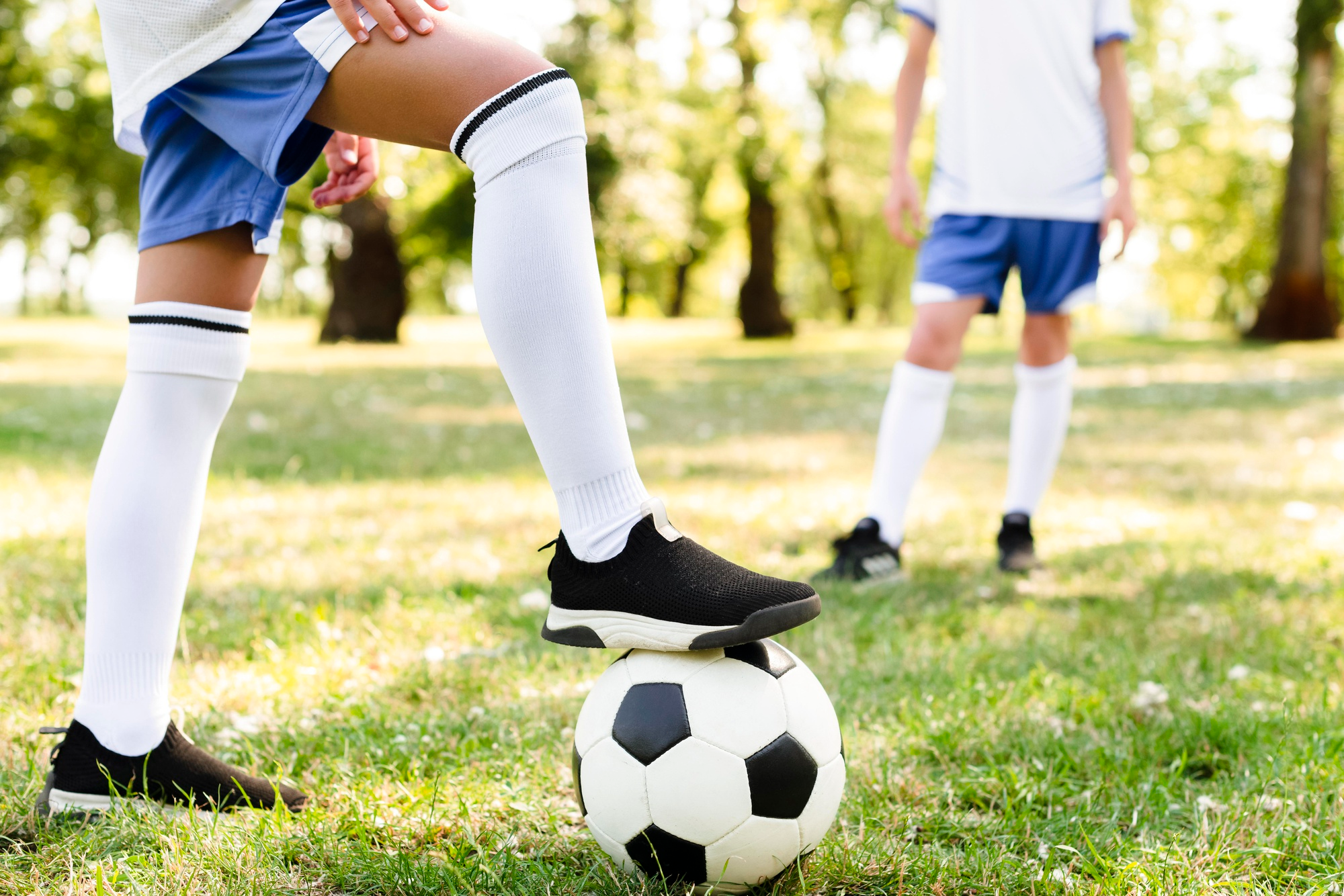
Children rarely move in only one way. They run, jump, throw, catch, kick, balance, twist, chase and climb, often switching between these movements without thinking about it.
That natural variety is one reason playing more than one sport can be so valuable during childhood.
A child who attends Childrens football training may learn to dribble, pass and move through space. The same child might develop hand-eye coordination during a Tennis session, practise different movement patterns in another activity, and then use all of those abilities while simply playing with friends in the park.
Each sport presents the body and brain with different challenges.
Rather than seeing sports as separate worlds, it can be helpful to think of them as different ways children learn how to move, cooperate, concentrate and solve problems.
For young children in particular, variety can make physical activity feel like exploration.
Different Sports Develop Different Movements
Football asks children to control a moving ball primarily with their feet.
Tennis asks them to track a ball while coordinating a racket with their hands and body.
Those two activities already create very different physical challenges.
During Football training, a child may practise running, changing direction, stopping quickly and kicking while remaining balanced.
During tennis, that same child might move sideways, react to a bouncing ball and coordinate a swing.
Neither set of skills exists completely separately.
Balance developed in one activity may help in another.
Footwork practised on a tennis court can support general agility.
The spatial awareness developed while playing football may help children understand movement in other games.
Young bodies learn through experience, and experiencing different types of movement gives children more ways to understand what their bodies can do.
Variety Can Build Broader Coordination
Coordination is not one single ability.
A child can be excellent at kicking a ball while finding catching difficult.
Another may comfortably use a racket but need more practice changing direction at speed.
Different sports challenge coordination in different ways.
A Tennis session requires children to connect what their eyes see with how their hands and racket respond.
Football often creates a different coordination problem because the feet are controlling the ball while the child is also moving.
Switching between sports gives children opportunities to practise both.
This can help them become more adaptable movers rather than becoming familiar with only one narrow pattern of activity.
For younger children who are still developing fundamental motor skills, that variety can be especially interesting.
Learning Can Transfer Between Sports
Children do not leave everything they have learned behind when they move from one activity to another.
Skills can transfer.
A child who becomes better at changing direction during Childrens football training may find similar movements easier on a tennis court.
Someone who develops quick reactions while playing tennis may respond more confidently to sudden changes during another game.
Even mental skills can transfer.
Listening to instructions, taking turns, managing frustration and concentrating on a task are useful across many sports.
Children begin to recognise familiar learning patterns.
Something new might still be difficult, but they have already experienced the process of practising, making mistakes and improving.
That experience itself can increase confidence.
More Than One Sport Can Keep Activity Interesting
Children’s interests can change quickly.
One month they may want to kick a football every day.
The next, they become fascinated by tennis.
That changing curiosity does not necessarily need to be discouraged.
Trying different activities can keep physical movement fresh and interesting.
A child may enjoy the teamwork of a Childrens football club while also appreciating the individual challenges of tennis.
Football might satisfy their desire to run around with a group.
Tennis might give them the satisfaction of beating a personal rally record.
The experiences are different, and that difference can help physical activity remain enjoyable.
For young children, enjoyment matters because positive experiences can influence whether they continue wanting to move and participate.
Children Discover What They Naturally Enjoy
Adults sometimes assume they already know which sport will suit a child.
The child may have other ideas.
Some children love football immediately.
Others discover they enjoy tennis more.
Some like both for completely different reasons.
Trying more than one sport gives children information about themselves.
They may discover that they enjoy team games.
Perhaps they prefer activities where they can concentrate independently.
A child might love running but dislike competitive matches.
Another may enjoy learning technical skills and repeating challenges.
There is no single correct sporting personality.
Exposure to different activities allows children to find the environments where they feel most comfortable and enthusiastic.
Team and Individual Sports Offer Different Social Experiences
A Childrens football club naturally creates many group interactions.
Children pass to teammates, communicate during games and work together towards shared goals.
They may celebrate a goal as a group or help each other during an activity.
Tennis can provide a different social experience.
Although often considered an individual sport, children may still practise in groups, rally with partners and participate in shared games.
The difference is that responsibility can sometimes feel more individual.
During a rally, a child has to respond to the next ball themselves.
Experiencing both team and individual activities can give children opportunities to become comfortable in different social situations.
They learn how to contribute to a group while also becoming more independent.
Different Sports Challenge Attention in Different Ways
Football can require children to monitor several things at once.
Where is the ball?
Where are the teammates?
Where is the goal?
Is a defender approaching?
Tennis often narrows attention more directly towards the incoming ball, its bounce and the player’s positioning.
Both require concentration, but the concentration feels different.
Moving between Football training and a Tennis session therefore gives children practice switching between different types of attention.
One environment may demand broad awareness.
Another may require intense focus on a single moving object.
Children gradually become more comfortable adjusting their attention according to the activity.
Variety Can Reduce Pressure Around Performance
When a child participates in only one sport, it can sometimes become a large part of how they see themselves.
They may begin to think of themselves simply as “the footballer” or “the tennis player.”
This can make mistakes feel more important than they need to be.
Playing different sports can create a broader perspective.
A difficult football session does not define everything.
Perhaps tennis felt fantastic that week.
A child who is struggling with one skill can still experience success somewhere else.
This variety can help keep sport connected with learning rather than identity or performance alone.
Young children should have room to be beginners.
They should be able to try activities without feeling that they need to be immediately good at them.
Being a Beginner More Than Once Can Build Confidence
There is something valuable about repeatedly experiencing the beginning of a learning process.
The first time a child holds a tennis racket, it may feel strange.
The first time they attend Childrens football training, controlling the ball may feel equally unfamiliar.
Each sport gives them another opportunity to learn how to be a beginner.
They discover that not knowing something yet is normal.
The first attempt may be awkward.
The second may be slightly better.
Eventually, the movement begins to make sense.
This pattern can build confidence because children start recognising that improvement is possible.
When they encounter a new activity later, they already have evidence that unfamiliar skills can become familiar.
Football Supports Lower-Body Control
Football naturally asks children to use their legs and feet in detailed ways.
Running is only part of it.
Players must learn to slow down, balance on one leg, manipulate the ball with the other foot and change direction while maintaining control.
Regular Football training can introduce children to different types of lower-body movement.
Dribbling requires gentle touches.
Passing requires accuracy and controlled force.
Shooting introduces a different combination of balance and power.
Defending involves reacting to someone else’s movement.
These experiences can contribute to broader physical literacy, particularly when combined with activities that challenge other parts of the body.
Tennis Adds Strong Hand-Eye Challenges
Tennis introduces the upper body in a very different way.
The child must track a moving ball and coordinate the racket with the correct moment of contact.
This makes a Tennis session particularly interesting for hand-eye coordination.
Children may begin with simple throwing and catching activities.
Later, they use a racket.
The extra piece of equipment makes the challenge more complicated because the child must understand where the racket is in relation to the hand and ball.
They also experiment with force.
A gentle swing sends the ball one distance.
A stronger movement produces something different.
These physical discoveries add another layer to a child’s movement vocabulary.
Different Sports Use Space Differently
The way children move through space changes depending on the sport.
Football can involve large areas and continuous movement.
Players may run from one side of the pitch to another, move around opponents and search for open spaces.
Tennis creates clearer boundaries.
Children need to understand court lines, positioning and how far they are from the net.
The ball can also move quickly from one side to another.
These different environments help children develop spatial awareness.
They learn that where they stand matters.
Where other people stand matters too.
The distance between themselves, the equipment and the target constantly changes.
Coaches Can Teach the Same Values in Different Ways
Different sports may use different equipment, rules and techniques, but many of the social lessons are similar.
Children need to listen.
They need to respect other players.
They have to take turns.
They experience mistakes.
They learn that effort does not always produce immediate success.
In a supportive Childrens football club, these lessons may happen through teamwork.
During a Tennis session, similar ideas may appear through rallies, partner activities and individual challenges.
Hearing these messages in different environments can reinforce them.
A child learns that patience is not only a football skill or a tennis skill.
It is something useful whenever they are learning.
Changing Activities Can Challenge Adaptability
Switching between sports requires children to adjust.
In football, touching the ball with the hand is usually avoided.
In tennis, controlling the racket with the hand is fundamental.
Football may involve continuous team movement.
Tennis can involve shorter repeated exchanges.
Children must recognise the different rules and change their behaviour accordingly.
This adaptability is a useful mental challenge.
They learn that different environments have different expectations.
Instead of relying on one familiar pattern, they become more flexible.
That flexibility can make new activities feel less intimidating.
Playing Several Sports Does Not Have to Mean a Busy Schedule
Variety does not necessarily require children to attend organised activities every day of the week.
Trying different sports can remain simple.
A child might attend regular Childrens football training and occasionally play tennis with family.
Another may join seasonal activities.
Informal play also counts.
Throwing a ball in the park, hitting balloons with a lightweight racket or inventing games in the garden all create movement experiences.
For young children, the aim does not need to be accumulating as many formal lessons as possible.
Rest, free play and unstructured time are important parts of childhood too.
Variety is useful when it expands enjoyment rather than making a child’s schedule feel like a list of obligations.
Children Can Bring Creativity From One Sport Into Another
Young players do not always separate sports into strict categories.
They experiment.
A child accustomed to football might bring quick footwork onto the tennis court.
Someone comfortable with tennis may enjoy football games involving reaction and timing.
This crossover can encourage creativity.
Children begin solving movement problems using experiences collected from different activities.
That is one reason broad sporting experiences can be so interesting during childhood.
There is no requirement for everything they learn to remain inside the boundaries of one game.
Movement itself becomes something they understand more deeply.
Social Circles Can Become Broader
Different sports can also introduce children to different groups of people.
Friends from football may be different from friends at tennis.
This gives children more opportunities to practise meeting people and becoming comfortable in new groups.
A child who is confident within their Childrens football club may initially feel nervous when attending another activity.
Gradually, they learn that they can become comfortable there too.
Their social world expands.
They discover that friendships can begin around many different shared interests.
For children who spend much of their time with the same school group, sport can provide valuable opportunities to connect with people outside that environment.
Enjoyment Can Remain at the Centre
There is plenty of time for children to develop preferences.
Some may eventually decide that football is the activity they love most.
Others might choose tennis.
Some will continue enjoying several sports for years.
The important part during childhood is often allowing enough variety for those preferences to develop naturally.
A Private tennis session might help a child discover that they enjoy focusing deeply on individual challenges.
A lively Football training session might reveal how much they enjoy teamwork and fast-moving games.
Neither experience needs to compete with the other.
Each gives the child something different.
One day they may be using their feet to weave a football through cones. Another day they may be balancing a tennis ball on a racket and trying not to let it fall. Somewhere between those two activities, they are building a wider collection of movement skills, learning how to adapt to new challenges and discovering that there are many different ways to enjoy being active.