
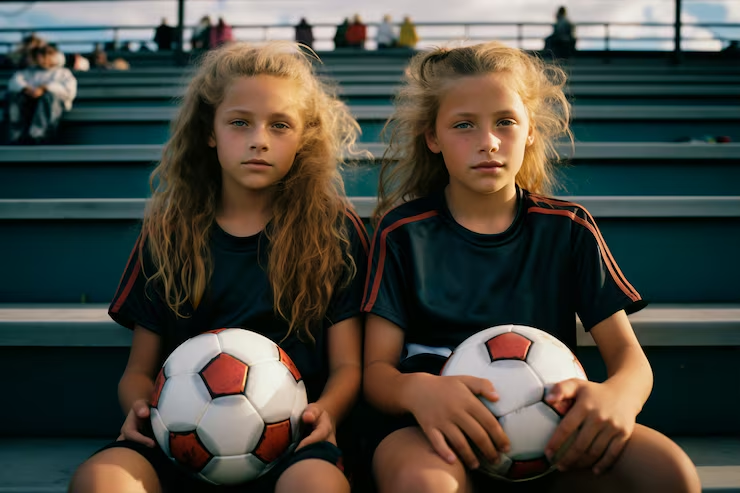
Children’s football training offers far more than just physical exercise. It creates a dynamic and structured environment where children can naturally develop essential social skills. At a young age, kids are still learning how to interact with others, manage emotions, and communicate effectively. A well-designed childrens football club can support this learning process, fostering emotional intelligence, teamwork, respect, and confidence — all through the lens of the beautiful game.
The Power of Play in Football Clubs
At the heart of any football club for children is the concept of play. Play is how young children explore the world and make sense of social relationships. Football introduces rules, structure, and collaboration into playtime, turning each session into a valuable opportunity for social growth.
In a typical training session, children learn to wait their turn, follow directions, listen to coaches, and cooperate with peers. These interactions — though they may seem simple — lay the foundation for vital social behaviors. Whether passing the ball to a teammate or cheering a friend after a good move, kids begin to understand the importance of empathy and cooperation.
Communication: Verbal and Non-Verbal Cues on the Pitch
Childrens football training encourages verbal and non-verbal communication in a way few other activities do. Coaches constantly guide children through exercises, and kids are prompted to talk, listen, and interpret both words and actions during gameplay. Eye contact, body language, and tone of voice become part of the communication toolkit.
For many children, especially those who may be shy or reserved, a structured football training session provides a safe space to practice speaking up and asserting themselves. Learning how to say “pass,” how to celebrate a goal respectfully, or how to encourage a teammate who’s feeling down — these are all valuable social lessons absorbed during a match.
Teamwork: The Backbone of Football
Football is a team sport by nature, making it the perfect setting for developing cooperative skills. Children quickly learn that success on the pitch depends on working together, not just individual talent. They experience the challenges and rewards of collaboration — understanding that the collective effort outweighs personal glory.
During football training, kids participate in drills that require coordination, such as passing sequences and small-sided games. These activities reinforce trust and mutual support. When children feel like part of a team, they are more likely to support others, handle conflict constructively, and develop a sense of loyalty and camaraderie.
Leadership and Responsibility
Not every child dreams of being the team captain, but football naturally creates moments where kids can step into leadership roles. Whether it’s helping to organize equipment, encouraging a teammate, or setting an example by staying focused, young players begin to understand responsibility and initiative.
In a good childrens football club, coaches intentionally rotate leadership opportunities. This allows every child to experience what it feels like to take charge and be accountable. These moments, though brief, can spark lasting confidence and improve a child’s ability to manage group dynamics in other settings, like school or extracurricular activities.
Managing Emotions: Wins, Losses, and Everything in Between
Sport is an emotional journey — especially for kids. The ups and downs of training and competition offer a natural setting to develop emotional regulation. Through football training, children face small setbacks (missing a goal, losing a game) and triumphs (scoring, being praised) that teach resilience and patience.
Experienced coaches use these moments as teachable opportunities. For instance, when a child becomes frustrated or overly competitive, the coach helps them reflect, calm down, and redirect their energy. Over time, kids learn to cope with disappointment and to stay composed under pressure — valuable skills that translate far beyond the pitch.
Inclusion and Friendship
One of the most beautiful aspects of joining a childrens football club is the opportunity to meet new people and form friendships. Kids from different backgrounds, neighborhoods, and age groups come together in an inclusive environment where the game is the common language.
This is particularly powerful for children who might struggle with social integration in school or other areas of life. Football can be the bridge that connects them to a wider circle of friends, where shared goals and mutual encouragement are the norm. Coaches often notice that children who initially stand apart become active participants over time, gaining not just skills but meaningful friendships.
Conflict Resolution in a Safe Setting
Disagreements are natural, especially when competition is involved. But unlike unstructured playground disputes, the football field is overseen by trained adults who guide kids through conflict in a healthy way. If a child feels a teammate isn’t playing fairly, or if there’s frustration over a referee’s call, coaches can help mediate and model appropriate responses.
Learning to express disagreement respectfully, to apologize, and to forgive — these are some of the most powerful social lessons a child can gain. Football gives children the space to experience small conflicts and, more importantly, to resolve them constructively with guidance.
Role Models: Coaches Who Inspire
Every childrens football training session is led by a coach, and for many young children, these coaches become important role models. A great coach doesn’t just teach technique — they model fairness, enthusiasm, patience, and respect. Kids watch closely and imitate behavior, whether it’s shaking hands after a game or offering encouragement during practice.
For this reason, it’s crucial that football clubs employ experienced, DBS-checked coaches who understand childhood development. Their influence goes beyond sport; they shape how children interact with peers, approach challenges, and build confidence in social environments.
Structured Routines and Predictable Social Settings
Football training also offers the benefit of routine. Children thrive in environments where they know what to expect — when the session starts, what the drills involve, how to behave. This structure provides a sense of security, which allows children to open up socially.
Because children attend regularly, they see the same peers and coaches each week, which strengthens bonds and reinforces social norms. Over time, they become more comfortable, more expressive, and more engaged — both emotionally and socially.
Beyond the Team: Social Growth in Private Sessions
While group settings are ideal for learning teamwork, a private tennis session or 1-on-1 football lesson can also support social development, especially for kids who need a little more confidence before engaging in group play. In these sessions, children still practice listening, expressing themselves, and building a trusting relationship with their coach.
Private sessions can serve as a stepping stone, helping children feel safe and empowered before they join a larger football club or take part in group tennis sessions. Coaches use the one-on-one time to gently build communication skills and emotional resilience, all through personalized attention.
Read More In: Balancing Competition and Fun in Youth Sports