
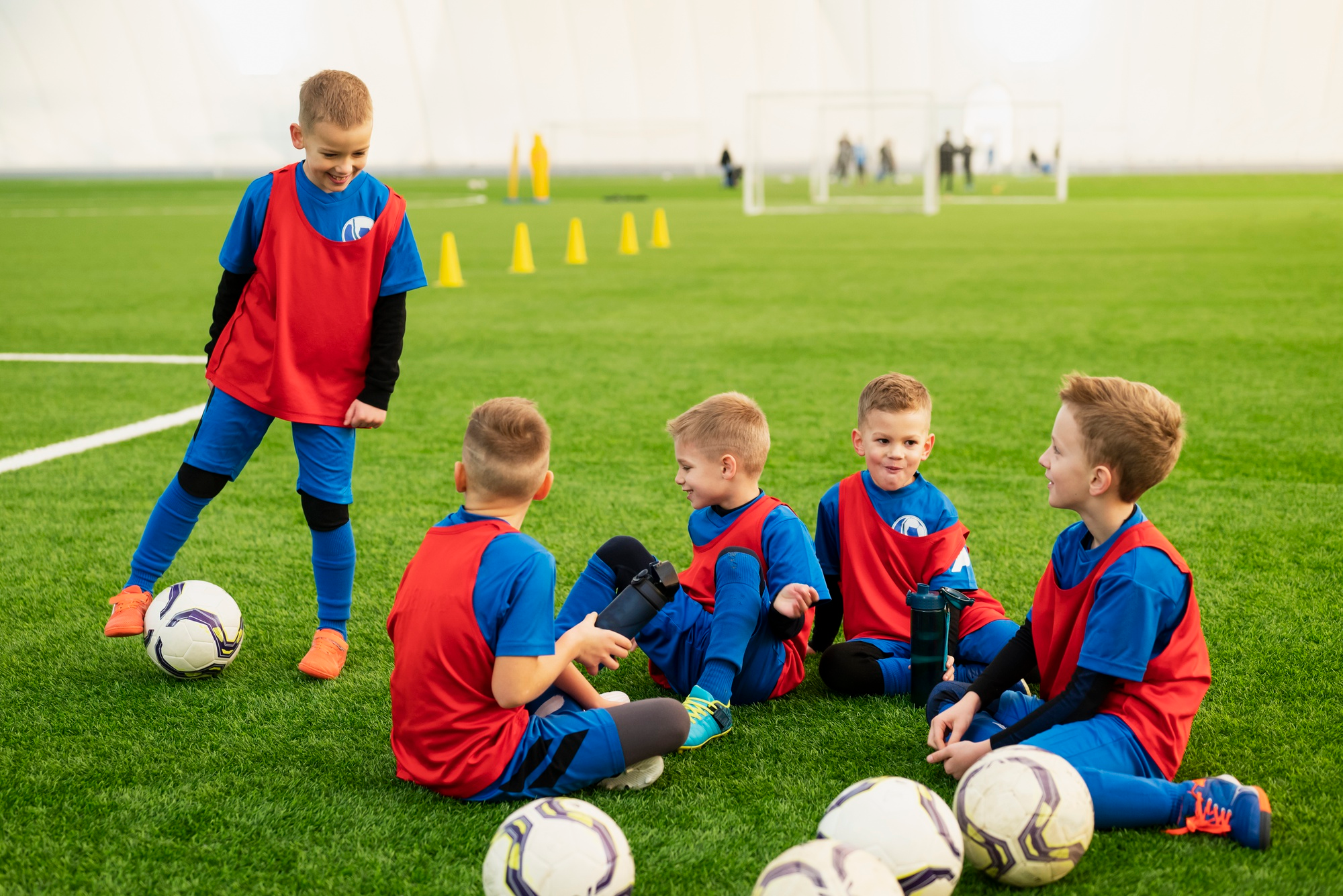
A football pitch can be much more than a place where children learn to pass, dribble and score goals. For many young players, it becomes a social space filled with familiar faces, shared jokes, exciting challenges and the simple pleasure of being part of a group.
Children may initially join a Childrens football club because they enjoy kicking a ball, but the relationships formed around the game can become just as important as the football itself. Week after week, players meet the same teammates, take part in activities together, celebrate successes and recover from mistakes as a group.
These repeated experiences create opportunities for friendships to develop naturally.
Unlike situations where children are expected simply to introduce themselves and start a conversation, football gives everyone an immediate reason to interact. There is always something happening: a ball to pass, a game to join, a teammate to help or a challenge to complete.
For children who are naturally confident and for those who need more time to feel comfortable around new people, that shared activity can provide a valuable starting point.
A Shared Interest Makes Meeting People Easier
Starting a conversation with someone new can feel difficult, especially for children who are shy.
Football removes some of that uncertainty.
Everyone has already arrived for the same reason.
A child can ask another player to pass the ball without needing to think of a conversation topic. Two children might begin kicking a ball between them before they even know each other’s names.
That small interaction can be the beginning of familiarity.
During Childrens football training, children repeatedly find themselves alongside different teammates. They may complete passing exercises in pairs, join small groups for challenges or play together in short matches.
Each activity provides another opportunity to communicate.
Over several weeks, children who were once strangers may begin greeting each other as soon as they arrive.
Familiar Faces Create Comfort
Belonging often develops through familiarity.
The first time a child attends a new session, nearly everything is unfamiliar. They may not know the coach, the other children or even where they are supposed to put their water bottle.
A few sessions later, the same environment can feel completely different.
The coach recognises them.
They recognise several teammates.
They know how the session normally begins.
They understand some of the games.
This predictability can help children feel secure.
Regular attendance at Football clubs gives young players repeated opportunities to become comfortable within a group.
A child who spends their first session quietly observing may gradually become the person laughing with teammates before training even starts.
These changes may happen so gradually that they are easy to overlook, but they are an important part of social development.
Team Activities Encourage Children to Communicate
Football cannot work very well without communication.
Even at a young age, children quickly discover that talking to teammates can help them play.
They might call someone’s name before passing.
They may ask for the ball.
A goalkeeper might warn a defender that another player is approaching.
Someone who has just scored may hear teammates celebrating with them.
These simple exchanges provide frequent opportunities to practise communication in a meaningful context.
During Football training, children are not communicating because an adult has told them to practise their social skills. They communicate because it helps them participate in the game.
That difference matters.
Social interaction becomes part of something enjoyable rather than a separate task.
Passing Teaches More Than Ball Control
Passing is one of football’s most basic technical skills, but it also contains an important social lesson.
When children first begin playing, many naturally want to keep the ball.
Having possession is exciting.
They may dribble towards the goal while teammates run beside them asking for a pass.
Gradually, they discover that sharing the ball can make the game work better.
Passing requires children to notice someone else.
They need to recognise that a teammate may be in a better position and trust that player to continue the move.
In a Childrens football club, hundreds of these little moments can happen across a season.
The technical skill is passing, but underneath it children are also practising cooperation, awareness and trust.
Celebrating Together Creates Shared Memories
Few things bring a group of children together as quickly as an exciting moment during a game.
A goal can result in instant celebration.
A goalkeeper making an unexpected save may receive cheers from teammates.
A player completing a difficult challenge for the first time might be congratulated by others in the group.
These shared emotional moments can strengthen connections between children.
The memories may also become stories they talk about later.
“Remember that goal?”
“Remember when the ball went over the fence?”
“Remember when everyone slipped in the mud?”
Not every memorable football moment is particularly impressive from a sporting perspective.
Sometimes the funniest incidents create the strongest memories.
Regular Childrens football training gives children a collection of experiences they share with people outside their family or school environment.
Learning to Encourage Other Players
Being a good teammate involves more than passing the ball.
Children gradually learn how their behaviour affects the people around them.
A few encouraging words can help another player feel more confident after making a mistake.
A high five can recognise someone’s effort.
Applauding a good attempt can show that success is not measured only by scoring.
These behaviours are often modelled by coaches and gradually copied by children.
Within supportive Football clubs, encouragement can become part of the group’s culture.
Children start learning that another person’s success can be something to celebrate rather than something that threatens their own position.
This is particularly valuable in sport because competition and cooperation exist at the same time.
Children can want to perform well while still supporting the people playing alongside them.
Different Personalities Can Find Their Place
A football group is rarely filled with children who behave in exactly the same way.
One player may be loud and energetic.
Another may be quiet and observant.
Someone might naturally organise teammates during games, while another child prefers to communicate mainly through actions.
A positive Childrens football club can give different personalities opportunities to contribute.
The most talkative child is not automatically the most important member of the group.
A quiet player might make thoughtful passes.
Another may consistently encourage teammates.
Someone who does not score many goals could be brilliant at helping defensively.
Recognising these different contributions can help children understand that belonging does not depend on being the loudest, fastest or most technically advanced person.
Everyone can have a role.
Football Can Expand a Child’s Social World
Many children’s friendships develop at school, but sport gives them another social environment.
At Football training, children may meet players from different classes, schools or neighbourhoods.
This broadens their opportunities to interact with people who may have different interests and personalities.
The football provides common ground.
Two children who might never have met otherwise can find themselves passing together every Saturday morning.
Over time, they may discover other shared interests too.
Having friendships in more than one setting can also give children different spaces in which to express themselves.
A child who feels quiet in one environment may become much more confident in another.
Small-Sided Games Bring Players Together
Small-sided football games are particularly useful for social interaction because everyone is involved more frequently.
With fewer players on each team, children usually receive more touches of the ball and have more reasons to communicate.
They may need to decide who will defend, who will restart the game or where a teammate should move.
These situations require cooperation.
There may also be disagreements.
Two players might both want to take a kick-in. Someone might feel that a teammate should have passed.
These moments are normal.
With appropriate guidance, children can learn how to solve small disagreements, listen to other viewpoints and continue playing together.
That is another way Childrens football training can support social learning without turning every situation into a formal lesson.
Mistakes Can Bring Teammates Closer
Nobody plays football without making mistakes.
A pass goes in the wrong direction.
A shot misses.
A defender loses the ball.
Even experienced players make errors.
For children, learning how a group responds to mistakes can shape whether football feels welcoming or intimidating.
In a supportive environment, teammates learn that one mistake does not define a player.
Someone can miss a shot and receive encouragement.
They can lose possession and have teammates help win it back.
This reinforces an important idea: the team continues together.
The sense that other people will support you when something goes wrong can contribute strongly to belonging.
A Childrens football club can become a place where children feel comfortable attempting new skills because they know perfection is not expected.
Coaches Help Shape the Social Environment
The coach has an important influence on how children treat one another.
If every activity focuses only on finding the best player, children can quickly begin measuring themselves against everyone else.
If effort, cooperation and improvement are also recognised, the group can develop a different atmosphere.
Coaches can encourage children to work with different partners rather than always staying with their closest friend.
They can praise good passes and good communication as well as goals.
They can make sure quieter players have opportunities to participate.
During Football training, these small decisions help shape how inclusive the group feels.
Children notice what adults recognise and value.
When teamwork is consistently treated as important, players often begin reflecting that behaviour themselves.
Having a Role Helps Children Feel Included
Children often feel a stronger connection to a group when they believe their contribution matters.
Football provides many opportunities for this.
One player may be asked to help demonstrate an activity.
Another could collect footballs at the end of a game.
Someone might become captain for a short match or help a new player understand an exercise.
These small responsibilities communicate trust.
They tell children that they are not simply present; they are part of what is happening.
This feeling can be particularly meaningful for children who initially lack confidence.
Over time, having responsibilities within a Childrens football club can help them feel more comfortable participating independently.
Rituals Can Strengthen the Feeling of Belonging
Groups naturally develop small routines.
A football team might begin every session with the same warm-up.
Players may gather together before a match.
There might be a team cheer after training or a particular game that everyone requests whenever there is extra time.
These rituals can seem simple, but they contribute to group identity.
Children begin to recognise that “this is what we do.”
Having shared routines creates predictability and connection.
Even something as small as putting hands together for a team cheer can create a moment when every child is literally part of the same circle.
New Players Learn From Existing Friendships
Joining an established group can initially feel intimidating.
Children may notice that other players already know each other.
A welcoming football environment makes space for newcomers rather than expecting them to immediately find their own way.
Pairing new children with different teammates during Childrens football training can help introduce them naturally.
Instead of asking a child to walk up to a group and make friends, an activity creates the connection for them.
“Work with this partner.”
“Pass between these cones.”
“Can you two collect three footballs together?”
Simple tasks create opportunities for first interactions.
After a few sessions, the new player may be the familiar face welcoming someone else.
Belonging Is Not About Being the Best Player
Children can sometimes assume that being good at football is the same as being important to the team.
A healthy group culture challenges that idea.
The strongest player is still only one part of the group.
A teammate who listens, shares the ball and encourages others can contribute enormously to everyone’s experience.
Some children may develop technical skills quickly.
Others may need much more time.
A supportive Childrens football club allows friendships to form across those differences.
Children can enjoy playing together without ranking every interaction according to ability.
That can make football more enjoyable and accessible for a wider range of personalities and experience levels.
Football Gives Children Stories They Share
Ask adults who played sport as children what they remember, and many will not immediately mention results or technical exercises.
They remember people.
The friend who always stood beside them during warm-ups.
The teammate who made everyone laugh.
The coach who invented unusual games.
The rainy training session when everyone went home covered in mud.
Childhood sport creates stories because children experience things together.
A regular Football training session may appear ordinary while it is happening, but repeated weeks of running, passing, laughing, learning and playing can gradually create something much larger than a collection of football exercises.
A child begins by learning names.
Then they recognise faces.
Soon they have preferred passing partners, teammates they trust and people they look forward to seeing.
The pitch becomes familiar, the group becomes meaningful, and football becomes connected not only with kicking a ball but with the feeling of arriving somewhere and knowing that there are people there who are happy to see you.