
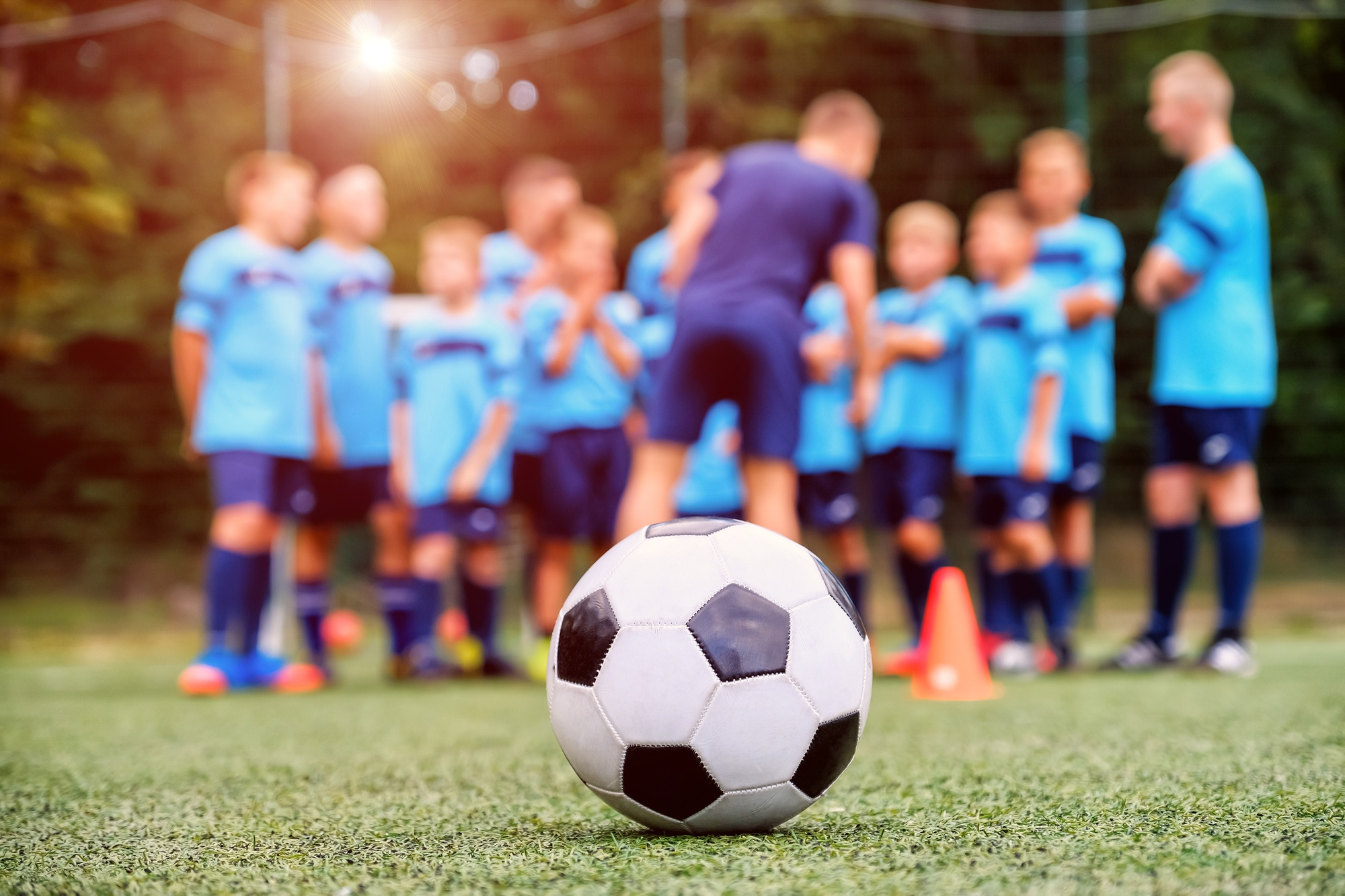
Children are naturally drawn to movement. Give them an open space and a ball, and many will quickly start running, kicking, chasing, experimenting and inventing their own games. Football takes this instinctive desire to move and places it within an environment where children can develop much more than sporting ability.
Joining a Childrens football club can give young players regular opportunities to practise physical skills, meet other children, solve problems, follow instructions and experience both success and disappointment in a supportive setting.
For children, football does not need to be about becoming the next professional player. The real value can often be found in the hundreds of smaller experiences that happen during each session: controlling a difficult ball, waiting for a turn, helping a teammate, listening to a coach or trying again after something does not work.
These experiences can contribute to different areas of healthy childhood development.
Movement Becomes Part of the Routine
Children need opportunities to move, and football provides plenty of them.
A typical Football training session may involve running, jogging, stopping, accelerating, turning, jumping and changing direction. Children might chase a ball across a pitch one minute and carefully guide it between cones the next.
All of this movement helps them explore what their bodies can do.
Young children are still developing fundamental movement skills, and regular physical activity provides opportunities to practise them in different situations.
Football can be particularly enjoyable because movement has a purpose.
A child is not simply running from one side of a field to another. They may be chasing a teammate, trying to reach a football, escaping from a defender or moving towards a goal.
This sense of purpose can make physical activity feel like play rather than exercise.
Coordination Develops Through Practice
Watch a young child learning to control a football and it becomes clear just how complicated the movement really is.
They need to judge where the ball is going, move their body towards it and decide how much force to use when kicking it.
At first, the result can be unpredictable.
A gentle pass might accidentally become a powerful shot. A child may attempt to stop the ball only to watch it roll straight past their foot.
That is part of the learning process.
During Childrens football training, children repeatedly experience movements involving their feet, eyes, body position and balance.
Gradually, they begin to understand how different movements affect the ball.
The same child who once chased the football after every touch may eventually learn to keep it close while dribbling.
These improvements can happen slowly, but every attempt gives the brain and body another opportunity to coordinate movement.
Balance and Agility Are Constantly Challenged
Football rarely involves moving in a straight line for very long.
A player may run forwards, suddenly change direction, turn around another child and then stop to control the ball.
These frequent changes make football a natural environment for practising balance and agility.
Even simple games can challenge these abilities.
A coach might ask children to dribble around cones, avoid other players or stop their football when a particular signal is given.
The activity may feel like a game, but children are constantly adjusting their movements.
As Football training becomes familiar, players can start combining skills. Instead of simply running or kicking, they may run while controlling a ball, look around while moving and change direction in response to another player.
That combination makes football both physically and mentally engaging.
Children Learn About Space
Understanding space is an important part of football.
Young children often begin by following the ball wherever it goes. If one player has possession, everyone else may crowd around them.
Anyone who has watched very young children play football will recognise the famous group of players travelling around the pitch together like one moving crowd.
Over time, children begin to notice that space matters.
They discover that moving away from the crowd can give them a better opportunity to receive a pass. They learn that defenders may need to position themselves between an opponent and the goal.
A Childrens football club gives children repeated opportunities to develop this awareness through games and activities.
Understanding space also requires observation.
Children have to notice where the ball is, where teammates are standing and how the situation is changing around them.
Football Encourages Decision-Making
Football is full of decisions.
Should I pass?
Should I shoot?
Should I keep dribbling?
Where should I move next?
Even the youngest players begin making these choices.
There may not always be a perfect answer, which makes the learning especially valuable.
During Childrens football training, coaches can create activities where children are encouraged to make their own decisions rather than simply following instructions every second.
For example, a player might choose between two goals or decide which teammate to pass to.
Sometimes the decision works brilliantly.
Sometimes the ball goes completely somewhere else.
Both outcomes provide information.
Children begin to understand that choices have consequences and that they can adjust what they do next time.
Social Skills Develop Naturally
Football is rarely played alone.
Even individual skill activities usually happen within a group environment where children are sharing equipment, listening together and observing one another.
As sessions become more interactive, communication naturally becomes important.
Children call for the ball, ask questions, congratulate teammates and sometimes negotiate who should take a turn.
These may appear to be ordinary moments, but they provide valuable social practice.
Joining Football clubs can also introduce children to people outside their usual social circles.
They might play alongside children from different schools, neighbourhoods or age groups.
Because everyone has football in common, there is already something connecting them.
For a child who finds meeting new people difficult, having a shared activity can remove some of the pressure from social interaction.
Teamwork Becomes Something Children Experience
Adults often tell children that teamwork is important.
Football allows them to experience why.
A child may initially believe that the best way to score is to keep the ball and run towards the goal alone.
Sometimes that works.
More often, they eventually discover that another teammate is standing in a better position.
Passing becomes an important lesson in cooperation.
The player has to give up possession temporarily and trust someone else.
During Football training, group activities can reinforce this idea without requiring long explanations about teamwork.
Children may complete passing challenges, work together to move a ball across an area or participate in games where success depends on several players contributing.
They begin to see that being useful to a team does not always mean scoring.
Children Can Discover Different Strengths
Not every child will be the fastest runner or the strongest kicker.
Fortunately, football includes many different roles and abilities.
One child might have excellent balance. Another may communicate clearly. Someone else may be particularly good at noticing where teammates are positioned.
A player who rarely scores might be excellent at winning the ball back.
Another might enjoy being a goalkeeper.
A supportive Childrens football club can help children recognise these different strengths.
This is important because confidence can be affected when children believe there is only one way to be good at sport.
Football offers many forms of contribution.
The energetic attacker, patient defender, encouraging teammate and careful passer can all bring something valuable to a group.
Listening Becomes an Active Skill
Children need to listen throughout a football session.
A coach might introduce a new game, demonstrate a movement or explain a safety rule.
The challenge is that children then have to turn those words into actions.
Listening therefore becomes active rather than passive.
If the coach explains that players should dribble towards a blue cone when they hear one signal and towards a red cone when they hear another, children need to remember the instruction while controlling their football.
This combination of listening, thinking and moving can make Childrens football training mentally stimulating as well as physically active.
Children also learn to listen to each other.
A teammate may call for a pass or warn them that another player is approaching.
Recognising and responding to that information becomes part of participating successfully in the game.
Football Creates Opportunities to Handle Frustration
Things do not always go well on a football pitch.
A child may miss a goal they desperately wanted to score.
Someone might take the ball from them.
Their team may lose a game.
A difficult skill may take several attempts to understand.
These situations can cause frustration, particularly for younger children who are still learning how to manage strong emotions.
A supportive Football training environment provides opportunities to experience these feelings in manageable situations.
Children can learn that missing a shot does not mean the game is over.
There will usually be another chance.
Losing the ball can be followed by trying to win it back.
A difficult activity can be attempted again.
Over time, children may become better at recovering from disappointment and returning their attention to what happens next.
Success Can Strengthen Confidence
Football also provides plenty of moments worth celebrating.
A first goal can feel enormous.
So can completing a pass, learning a new skill or receiving praise from a coach.
For a child who has struggled with something for several weeks, suddenly being able to do it can create a strong feeling of achievement.
Confidence often grows from these experiences because the child can connect effort with improvement.
Regular attendance at a Childrens football club makes these moments possible.
Children can remember what they found difficult during earlier sessions and notice that it has become easier.
The improvement may be small from an adult perspective, but for the child it can feel significant.
Friendships Can Grow Around Shared Experiences
Football creates memories.
Children remember funny moments during warm-ups, exciting goals, unusual games and teammates who helped them.
These shared experiences can gradually become the foundation for friendships.
Week after week, children see familiar faces.
They may begin by simply standing beside someone during an activity. Later, they start passing together. Eventually, they may arrive looking for each other before the session begins.
For some children, Football clubs become an important social space outside school.
This gives them another environment in which to practise building relationships and becoming comfortable with different groups of people.
Routine Can Help Children Feel Secure
Regular activities can provide useful structure in a child’s week.
Knowing that football happens on a particular day gives children something familiar to anticipate.
They know where they are going, who they are likely to see and what kind of activities may happen.
For children who initially feel nervous about new environments, this familiarity can be particularly helpful.
The first Football training session may feel uncertain.
By the fifth session, the same environment can feel completely different.
The coach is familiar. The equipment is familiar. Some teammates are familiar.
With that increased comfort, children may become more willing to participate, communicate and try difficult activities.
Sport Can Encourage Healthy Attitudes Towards Activity
Children’s earliest experiences of organised sport can influence how they think about physical activity.
If sport feels entirely focused on pressure, comparison or results, some children may quickly decide it is not for them.
If it feels playful, challenging and welcoming, physical activity can become something they associate with enjoyment.
This is why age-appropriate Childrens football training matters.
Children should have opportunities to run, experiment, laugh and learn while gradually developing football skills.
Not every activity needs to look like a traditional match.
Imaginative games, movement challenges and playful competitions can all help young players enjoy being active.
Coaches Can Become Positive Role Models
Coaches occupy an interesting position in children’s sport.
They are adults, but they interact with children in a very different environment from teachers or parents.
A coach can demonstrate qualities such as patience, fairness, respect and persistence through everyday interactions.
When a player makes a mistake, the coach’s reaction teaches something.
When two children disagree, the way the situation is managed teaches something too.
A good Childrens football club understands that coaching young players involves more than explaining how to pass or shoot.
Coaches help shape the environment in which children experience sport.
Encouraging effort, treating players fairly and recognising positive behaviour can help create a space where children feel comfortable learning.
Independence Can Grow One Session at a Time
For younger children, joining a group activity without a parent beside them can itself be an important step.
During early sessions, a child may repeatedly look towards their parent for reassurance.
As the environment becomes familiar, this may gradually change.
They begin approaching the coach independently.
They find their own place in the group.
They remember where equipment belongs or what happens at the beginning of the session.
These apparently small behaviours can represent growing independence.
Football gives children a controlled environment where they can practise doing things for themselves while trusted adults remain nearby.
Development Does Not Always Look Like Football
One of the most interesting things about children’s sport is that some of the most valuable progress may have little to do with technical ability.
A child may finish several weeks of Football training without becoming dramatically better at shooting, yet they may have become much more comfortable speaking within a group.
Another may still struggle with dribbling but now listens carefully when activities are explained.
A shy child might start greeting teammates without encouragement.
An impatient player might gradually become better at waiting for a turn.
These changes can easily be missed if development is measured only by goals, passes or victories.
Young children are developing socially, emotionally, physically and cognitively at the same time.
Football simply gives many of those areas somewhere to meet.
A session can involve movement, problem-solving, communication, creativity, independence and cooperation within the same hour. While children may believe they are simply chasing a ball around a pitch, every game, pass, mistake, conversation and challenge offers another small opportunity to learn about themselves and the people playing alongside them.